
Search visibility is changing.
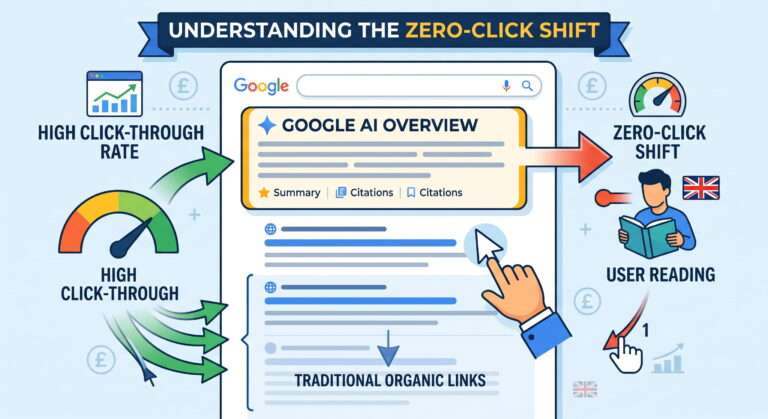
For years, businesses focused on ranking higher in Google. If your website appeared near the top of search results, users clicked your link and visited your site.
Today, people search differently.
Instead of browsing multiple links, they ask a question and trust the answer generated by platforms like ChatGPT, Gemini, Perplexity and Google AI Overviews.
This shift has introduced a new optimisation model called Answer Engine Optimization.
SEO helps people find your website.
AEO helps AI recommend your business.
Both matter, but they solve different visibility challenges.
What Is SEO
Search Engine Optimization helps your website rank higher in traditional search engines such as Google.
The goal of SEO is visibility in search results.
Typical SEO improvements include:
- keyword optimisation
- technical website performance
- mobile usability
- internal linking
- backlink building
- page structure improvements
When these signals align, search engines understand your website better and rank it higher.
This increases traffic from people browsing search results.
SEO remains the foundation of online discovery.
What Is AEO
Answer Engine Optimization helps your business appear directly inside AI-generated answers on platforms like ChatGPT, Gemini and Perplexity.
Instead of competing for clicks, you are competing to become the answer itself.
Modern search users often ask questions such as:
- Who is the best accountant for small businesses
- What is AI SEO
- Which local marketing agency improves AI visibility
AI platforms respond with structured answers.
Businesses included inside those answers gain immediate trust and visibility.
That is the goal of AEO.
Keywords vs Questions: The Core Difference Between SEO and AEO
Traditional SEO focuses on keywords.
AEO focuses on questions.
Example SEO query:
plasterer London
Example AEO query:
Who is the best plasterer in London for residential work
AI search platforms are prompt-driven systems. They generate answers from questions rather than matching keyword strings.
Businesses that structure content around real questions become easier to reference inside AI responses.
Ranking Pages vs Being Cited as the Answer
SEO success means ranking a webpage.
AEO success means being cited as a trusted source.
Ranking increases visibility.
Being cited increases authority.
When your business appears inside an AI-generated response, users see your brand as part of the recommendation itself.
That changes how decisions are made.
Long Content vs Clear Answers
Traditional SEO often rewarded long content.
Modern AI search rewards clarity.
AI systems prefer content that:
- answers questions early
- uses structured headings
- removes unnecessary filler
- explains topics clearly
- supports confident conclusions
Length matters less than usefulness.
Clarity improves extraction.
Extraction improves recommendation likelihood.
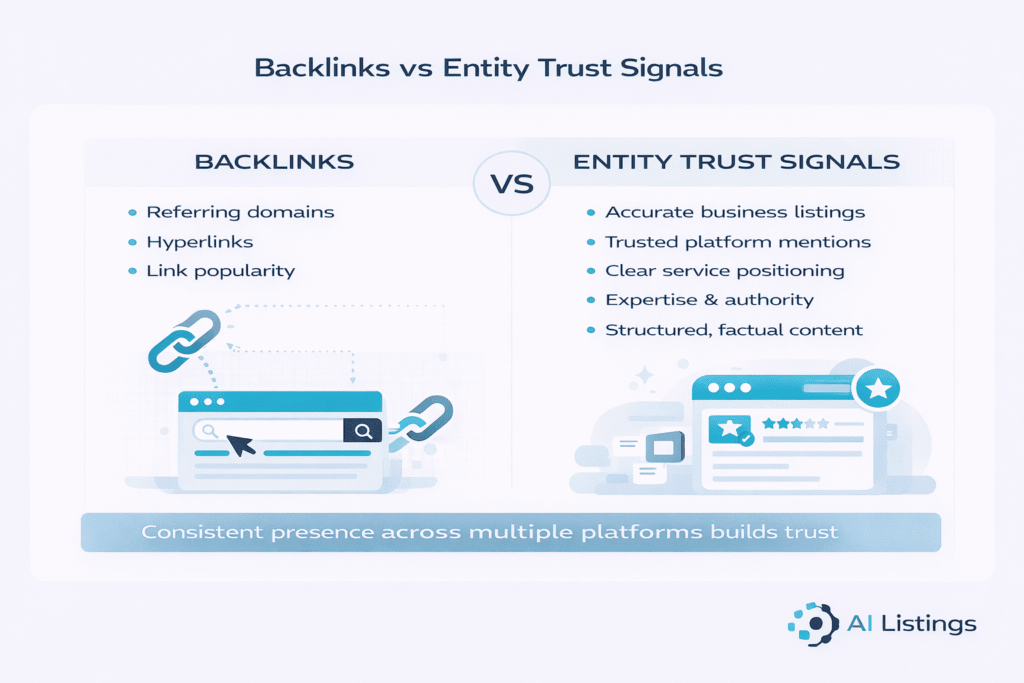
Backlinks vs Entity Trust Signals
Backlinks remain important for search engines.
But AI systems evaluate trust differently.
Instead of relying only on links, they assess entity credibility.
Entity trust includes:
- consistent business information across the web
- clear service positioning
- mentions on trusted platforms
- topic-focused expertise
- structured content clarity
AI platforms recommend businesses they recognise as reliable entities, not just well-linked websites.
What Entity Trust Means in AI Search
Entity trust describes how confident AI systems are that your business is:
- real
- credible
- consistent
- experienced in a defined area
AI platforms evaluate businesses rather than individual pages.
If your business lacks strong entity signals, it becomes harder to appear inside AI-generated responses.
Strong entity signals increase recommendation confidence.
How AI Systems Build Entity Trust
AI platforms confirm credibility by analysing patterns across multiple sources.
They look for:
- consistent business name address and contact details
- clear explanation of services
- mentions across directories and platforms
- content that answers questions directly
- topic depth within a defined niche
The stronger these signals become, the easier it is for AI platforms to recognise your business as a trusted provider.
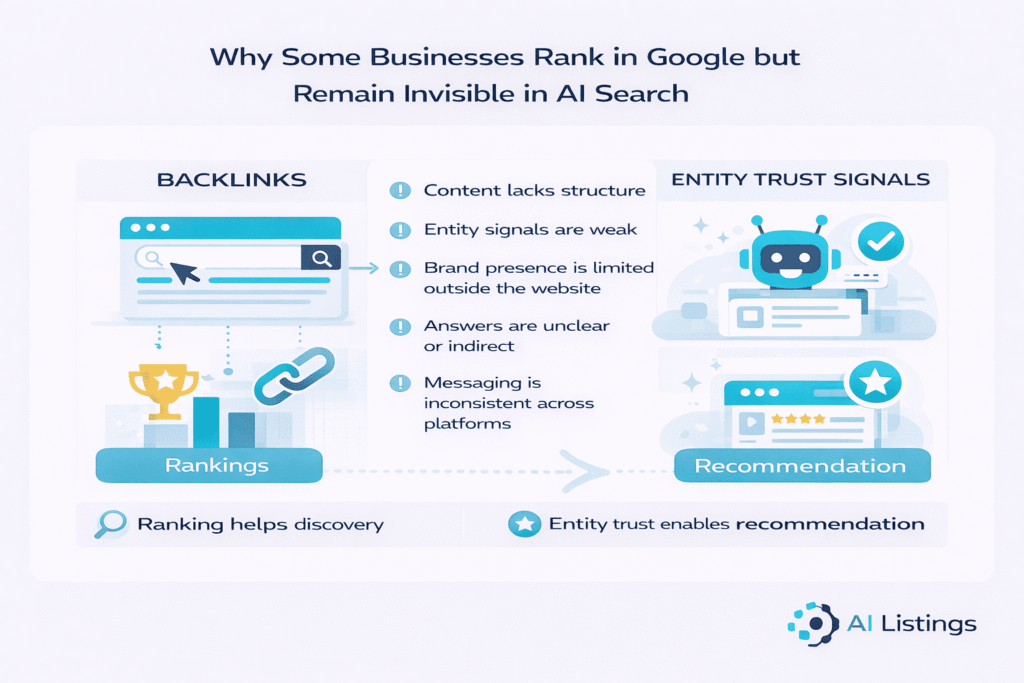
Why Some Businesses Rank in Google but Remain Invisible in AI Search
Many businesses assume ranking equals visibility.
That is no longer true.
A website can rank well in Google but still not appear inside AI-generated answers.
This happens when:
- content lacks structure
- entity signals are weak
- brand presence is limited outside the website
- answers are unclear or indirect
- messaging is inconsistent across platforms
Ranking helps discovery.
Entity trust enables recommendation.
Metadata vs Answer Blocks: A Key Technical Difference
Traditional SEO focuses heavily on metadata such as:
- title tags
- meta descriptions
- headers
- keyword placement
AEO focuses on answer formatting instead.
AI-ready content includes:
- direct answer blocks
- structured responses
- question-based headings
- clear definitions
- extractable summaries
This makes content easier for AI systems to understand and reuse.
How Local SEO Strengthens AEO Performance
Local signals play an important role in AI discovery systems.
Service-based businesses especially benefit from strong local trust signals such as:
- Google Business Profile optimisation
- consistent directory listings
- accurate contact details
- location-specific service pages
- regional content relevance
These signals help AI systems confirm that your business operates in a defined service area.
That increases recommendation confidence.
Why the Shift from Search Engines to Answer Engines Matters Now
AI-powered discovery is no longer experimental.
It is already changing how people choose businesses.
Instead of browsing results pages, users increasingly rely on direct answers generated by AI platforms.
Businesses that adapt early gain advantages such as:
- stronger trust signals
- higher recommendation probability
- better positioning inside AI-generated responses
- long-term visibility stability
This shift rewards clarity, consistency and structured expertise.
How Businesses Can Start Improving AEO Today
You do not need to replace your SEO strategy.
You need to expand it.
Start with simple improvements:
- structure service pages around real questions
- publish direct answer sections
- strengthen Google Business Profile information
- align directory listings across platforms
- maintain consistent service descriptions
- build topic-focused content clusters
These changes increase your chances of appearing inside AI-generated answers.
SEO Helps People Find You. AEO Helps AI Recommend You
Traditional SEO remains essential.
It helps search engines understand your website.
Answer Engine Optimization builds the next layer of visibility.
It helps AI systems recognise your business as a trusted source.
Businesses that combine SEO and AEO gain stronger discovery across both search engines and AI platforms.
AI Listings helps businesses strengthen both layers using structured SEO and AEO strategies designed for modern search environments where recommendations matter as much as rankings.