Be the Product AI Recommends When Shoppers Ask What to Buy
When a shopper asks an AI tool what to buy, it shows a handful of products and the shops that sell them. Everything else is invisible. Our AI SEO for ecommerce builds the product data and trust signals that decide which products come back.
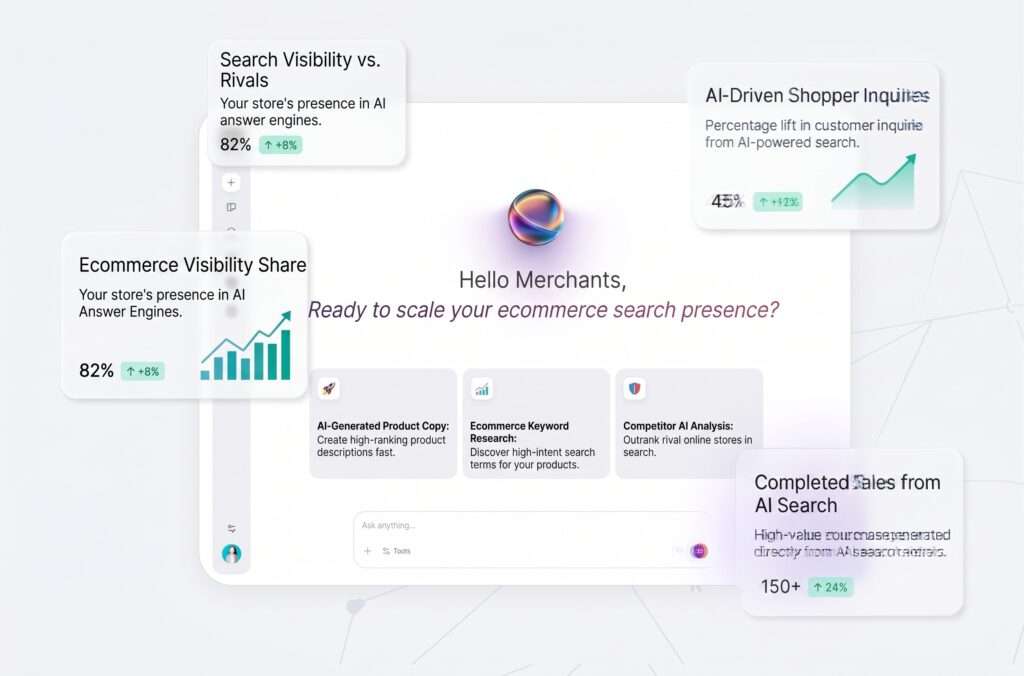
AI SEO for ecommerce, sometimes called generative SEO for ecommerce, makes your products and your shop part of the shortlist AI tools give when someone is deciding what to buy. It is product visibility rebuilt for a world where the assistant does the comparing.
When someone asks “what is the best waterproof walking boot under £150” or “which coffee grinder suits a beginner”, AI systems pull together products they can describe with confidence: a clear specification, a current price, stock, reviews and a shop they trust. This work makes sure AI can:
WHY ONLINE SHOPS NEED THIS NOW
Shopping answers are short. A results page offered rows of products; an AI answer narrows them to a few, and the shopper often buys from that shortlist.
AI visibility for ecommerce matters now because AI:
The upside is that most shops have not looked at their product data with AI in mind yet.
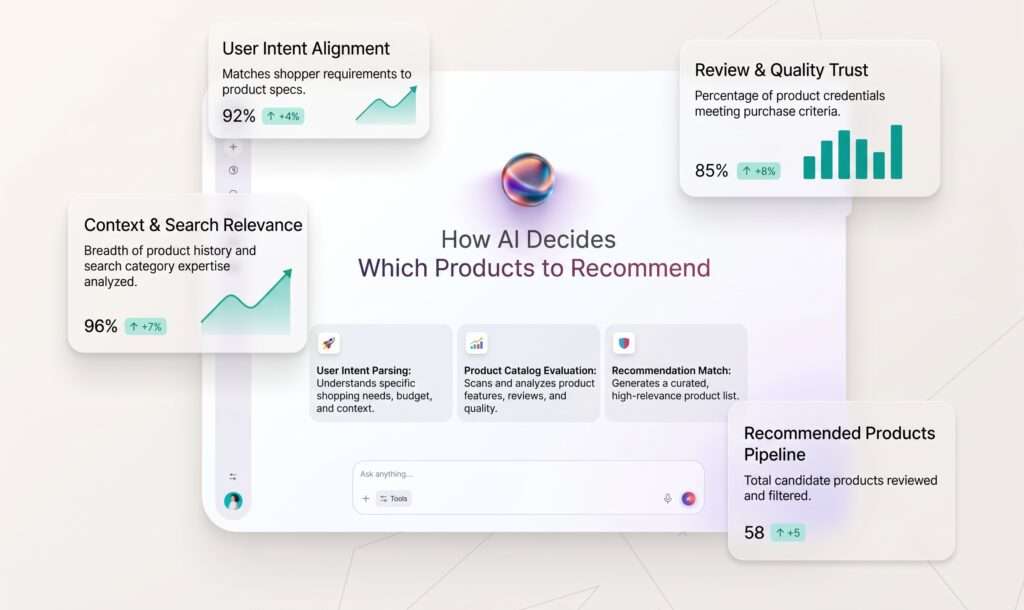
AI does not browse your shop like a person. It builds its view of your products from your product feeds, your product pages and what other people say about them, and it treats disagreement as doubt. A product listed at one price in a feed, another on the page and out of stock somewhere else is a product AI hesitates to put in front of a shopper.
Our approach for online shops focuses on:
The Shortlist System™ sits behind this, testing real shopping questions across AI tools and tracking whether your products and your shop are named.
Our optimisation framework is purpose-built for AI discovery, not adapted from traditional SEO. The Shortlist System™ sits at the centre of this approach, guiding every optimisation decision with real AI visibility data.
Together, these elements position AI Listings as one of the most effective AI search
engine optimisation platforms available today.
Most ecommerce reporting still tracks rankings, shopping ad spend and click-through. Useful, but none of it tells you whether AI names your products when a shopper asks for a recommendation.
As a specialist in AI visibility, we:
The approach is the same one behind our case studies, where focused businesses have become the named recommendation in their category.
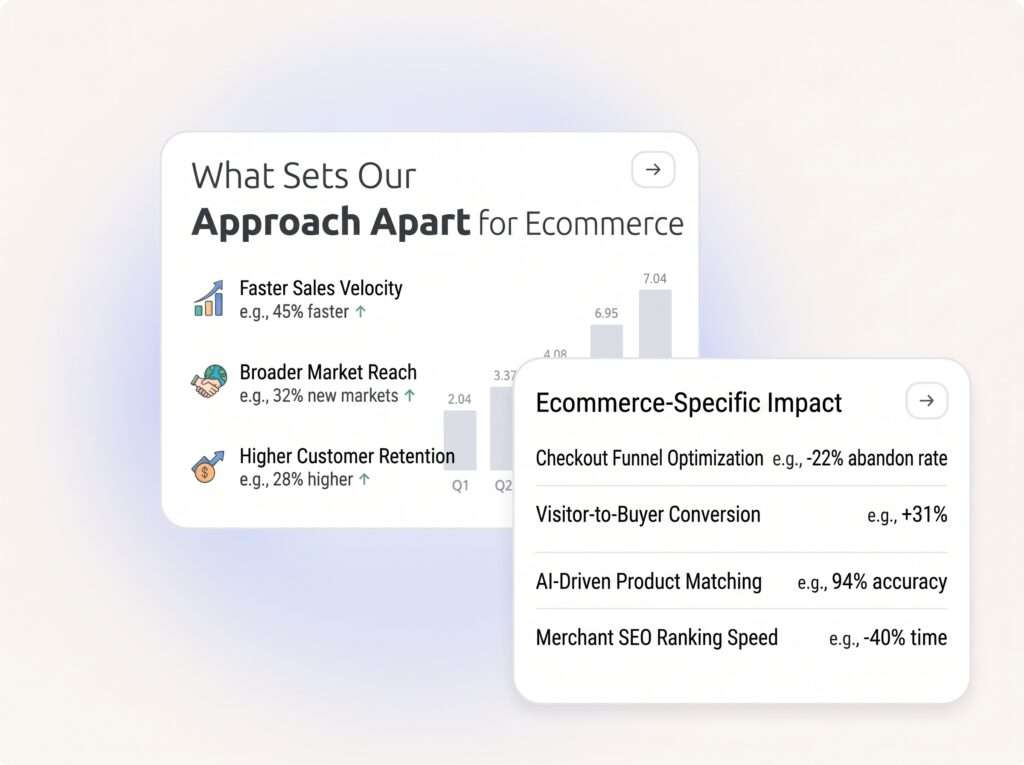
Our services for online shops are built for one outcome: your products being named when a shopper asks AI what to buy. Each focuses on product data, trust and measurable visibility.
Packages & What You Get
Every package includes platform access, expert support and clear reporting.
These results come from applying AI visibility work consistently, not from one-off fixes.
AI SEO for ecommerce is the work of getting your products recommended in the answers AI tools give when shoppers ask what to buy. It combines accurate product data across your site and feeds, product and category content that answers real buying questions, verifiable trust signals such as reviews and clear delivery and returns information, and regular testing of the questions shoppers actually ask.
Traditional ecommerce SEO aims to rank product and category pages in a list of results, where the shopper clicks through and compares. AI SEO aims to have your products named inside the answer, where the comparing has already been done and only a few products are shown. The foundations overlap, particularly clean product data and strong category pages, but the target and the measurement are different.
ChatGPT, Google’s AI Mode and AI Overviews, Gemini, Perplexity and Microsoft Copilot all answer shopping questions, and each sources product information a little differently. ChatGPT and Google both take product data directly from merchants through feeds, and Perplexity runs a free merchant programme. That is why we test and report per platform rather than as one blended figure.
Yes, increasingly. ChatGPT accepts product feeds from approved merchants, and Google’s AI shopping results draw heavily on Merchant Center data. If you sell through a platform such as Shopify, some of your catalogue may already reach AI tools through it. Either way, the quality of that data decides how your products are described, so incomplete titles, missing attributes or out-of-date prices cost you places.
It is common and usually traceable. Wrong details tend to come from an out-of-date feed, a page that disagrees with the feed, an old listing on a marketplace or comparison site, or a product page that never states the specification plainly. We find the conflicting sources, correct the ones you control, then re-test so AI describes your products accurately.
Not in the answer itself. Some AI tools now carry ads, but they are labelled as sponsored and kept separate from the answer, and OpenAI states that ads do not influence what ChatGPT says. Being named in the answer still depends on your product data, your reputation and how well your content matches what the shopper asked.
Yes. Product and shop reviews are independent evidence AI can weigh, and volume, recency and detail all count. Reviews that describe how a product performs in real use are especially useful, because they match the way shoppers ask questions. Fake reviews undermine the trust they are meant to build, and they are now banned under UK consumer law.
Most shops see early movement within 8 to 12 weeks. Feed and product data fixes can register quickly, while reviews and independent mentions build over months. We re-test your shopping questions monthly, so progress is visible rather than assumed.
Often, yes. AI answers tend to favour products they can describe and verify clearly, not simply the biggest retailers. A specialist shop with complete product data, honest detail and good reviews can be named in its niche ahead of larger stores with thin listings. The advantage goes to shops that make their products easy to understand.
Yes. The work is about the product data, content and signals AI relies on, which apply whatever your shop runs on. We work alongside your existing platform, feed tools and developers, and tell you exactly which fields and pages need to change.
Shoppers are asking AI what to buy today. Find out whether your products come back, and what it takes to be one of the few that do.
Share a few details and we’ll come back with the right next step.