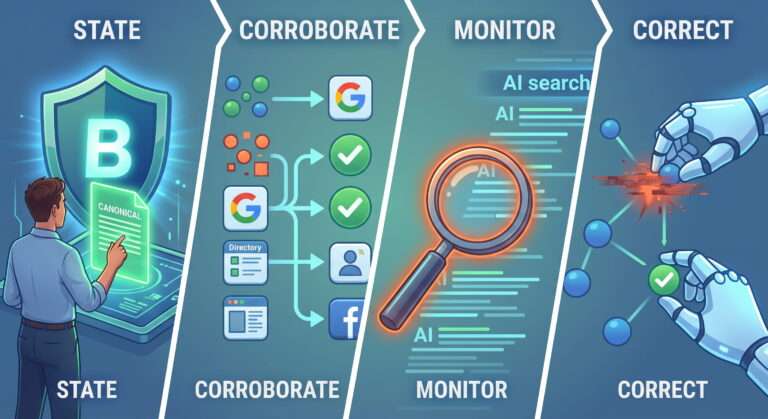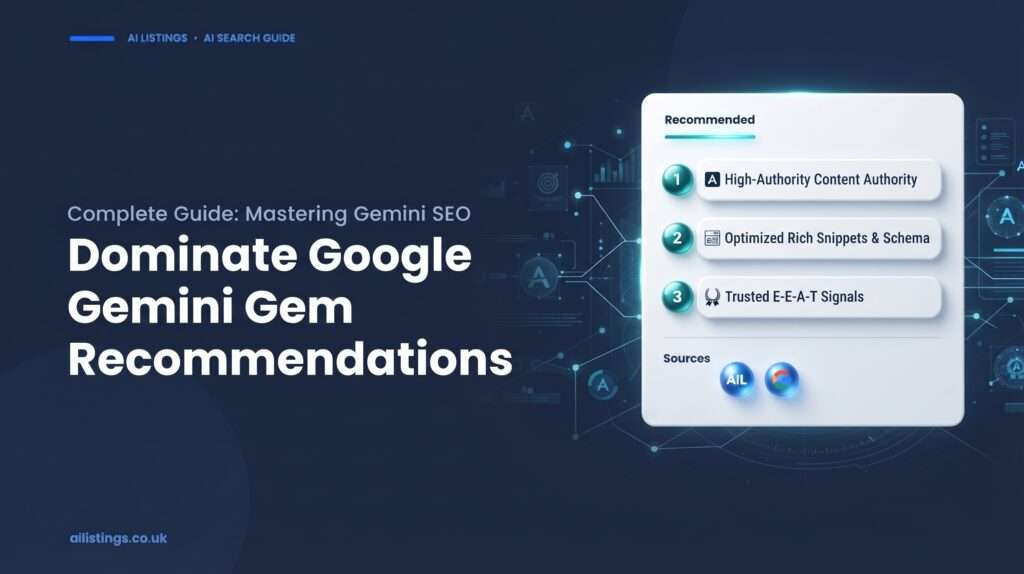
A practical guide to how Perplexity chooses its sources, and the steps that make your brand one of the names it cites.
Picture a buyer in your town opening Perplexity and typing the exact question your business was built to answer. A few seconds later they get a confident, well organised reply with a short list of named sources beside it. If your brand is one of those sources, you have just been recommended at the precise moment someone was deciding who to trust. If it is not, you were never in the room, and you will never see the enquiry you missed. Getting into that list is what Perplexity SEO is really about: making your brand one of the sources Perplexity cites when your customers ask.
Perplexity is not a traditional search engine handing back ten blue links, and it is not a chatbot answering from memory. It sits in between. For every question it searches the live web, reads what it finds, writes a direct answer, and shows its working with numbered citations. That single design choice changes the goal for a business. You are no longer only trying to rank a page. You are trying to become a source the model trusts enough to quote. If you have ever wondered why you do not appear in AI results, Perplexity is the best place to start fixing it, because it tells you exactly who it is citing.
This guide walks through how Perplexity finds and chooses sources, the signals that decide who gets cited, and the practical steps that make your pages easy to quote. It maps directly to the work we do on our Perplexity SEO service, and it sits inside the wider approach we take across AI visibility optimisation. Let us start with why this particular tool deserves your attention.
Why Perplexity is worth your attention
Perplexity has grown into one of the busiest answer engines on the web, handling tens of millions of searches a day, and its audience leans towards researchers, professionals and buyers in the middle of making a decision. That combination of scale and intent is why it has moved from a curiosity to something worth optimising for. Four things make it matter for a business in particular.
- It shows its sources. Every answer lists the pages it used as clickable links, so unlike some AI tools, Perplexity can send real referral traffic back to the businesses it cites. It is the closest thing in AI search to a genuine traffic channel.
- A citation reads like an endorsement. Being named as a source arrives with the model’s implicit trust attached, which is closer to a recommendation than a tenth place ranking ever was.
- It reaches people mid decision. Perplexity users tend to ask comparative, research style questions, which is exactly the moment a well placed citation can win the work.
- It behaves differently from the other tools. A business can be quoted confidently by Perplexity while being invisible in ChatGPT or Google’s AI answers, and the reverse is just as common. It is worth understanding why some businesses appear again and again in AI answers, because the same trust patterns repeat here.
How Perplexity builds an answer
Before you can influence Perplexity, it helps to see what happens in the few seconds after someone hits enter. Perplexity runs on a method called retrieval augmented generation, or RAG. In plain English, it does not answer from a fixed memory the way a standalone chatbot does. It searches the web in real time, reads the results, and writes its answer from the pages it has just found.
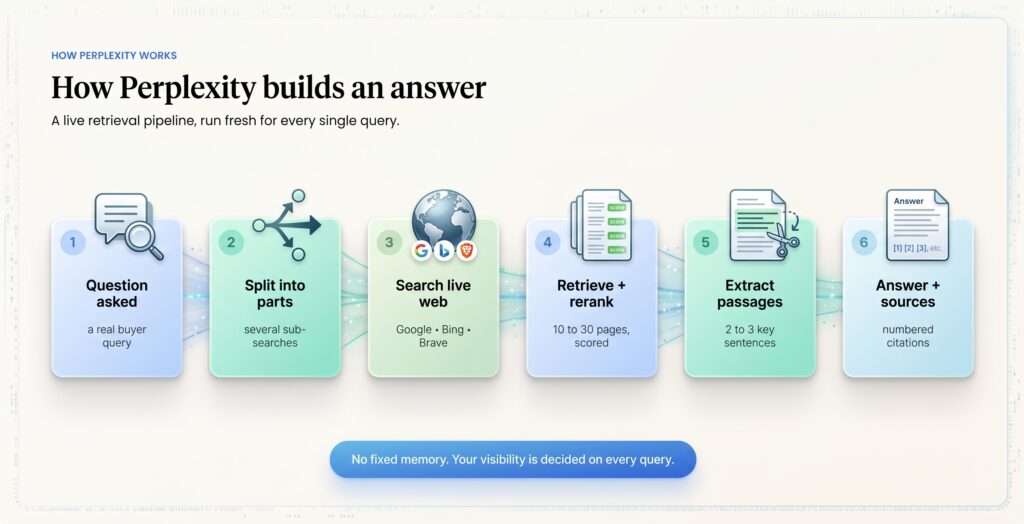
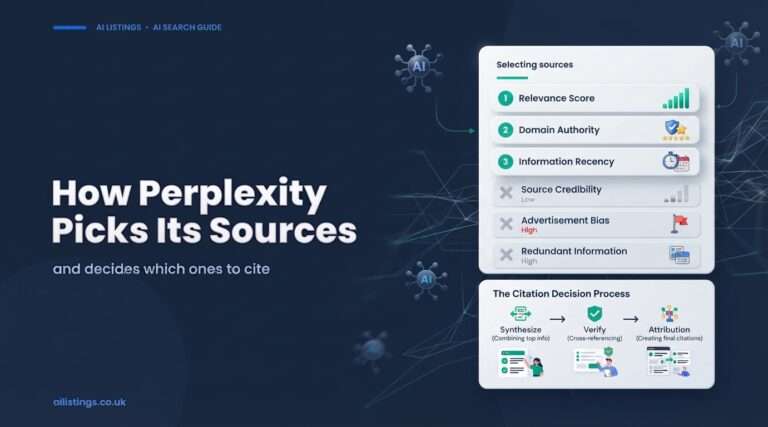
The pipeline looks roughly like this. Perplexity takes your question and breaks it into several smaller searches. It runs those searches against live results, drawing on more than one search engine rather than a single index. It pulls back a shortlist of candidate pages, often somewhere between ten and thirty. It reranks them against your specific question using signals such as relevance, authority and freshness. It extracts the two or three sentences from each promising page that answer the question best. Then it stitches those pieces into one reply, with a numbered citation against each claim so the reader can check the source.
Two things follow from this design, and both are good news. First, because Perplexity cites several sources in a single answer, you do not need to own the single best page on the entire internet. You can earn a citation simply by being the clearest source for one part of the question. Second, because it retrieves fresh every time, your visibility is decided again on every query rather than locked in place like a classic ranking. A page that is easy to read and quote can start appearing quickly once Perplexity can see it.
What decides who gets cited
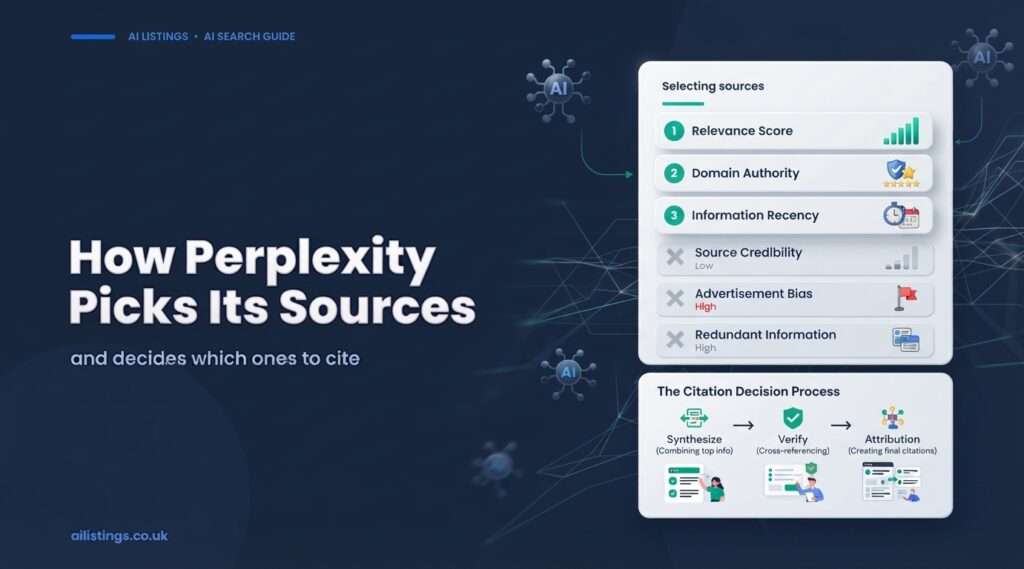
So Perplexity gathers a shortlist and reranks it. What is it actually looking for? Researchers who have studied large numbers of Perplexity answers describe a fairly consistent set of quality signals. We group them into six.
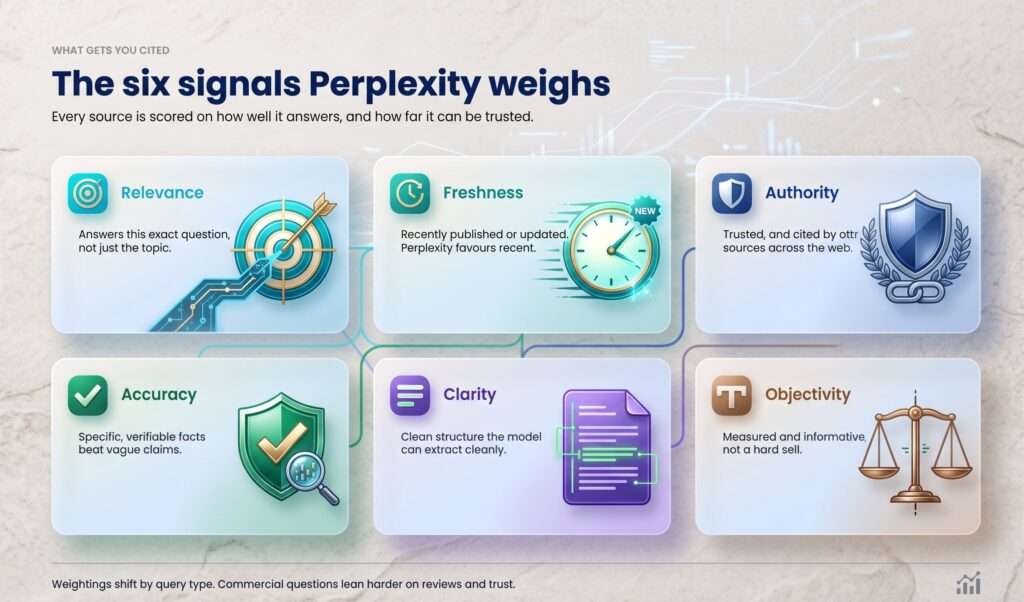
- Relevance. The page has to answer the exact question, not merely mention the topic in passing. A page built around the precise question a buyer asks will almost always beat a broad, unfocused article.
- Freshness. Perplexity has one of the strongest recency biases of any AI search tool. It shows publication and update dates, and on fast moving questions, older pages quietly lose priority. Content that has not been touched in a couple of years is a common reason good businesses drop out.
- Authority. Pages that are trusted, and that other reputable sites reference, are favoured. Because Perplexity leans on more than one search engine, the authority signals it sees are broad rather than tied to a single algorithm.
- Accuracy. Specific, verifiable facts beat vague claims. A clear figure, date or definition is easier to trust and easier to quote than a sweeping statement.
- Clarity. Clean structure matters more than most people expect. Descriptive headings, short paragraphs and self contained sentences make it easy for the model to lift the right passage. Our guide on how to structure content for AI search goes deeper on this.
- Objectivity. Measured, informative writing tends to be quoted more readily than hard sell. Perplexity is assembling an answer, not a sales page, so content that reads like useful information fits its needs better.
One important caveat: the weighting of these signals shifts by the type of question. For commercial queries, where someone is comparing providers, trust and third party proof carry more weight, and review platforms and community discussions feature heavily. We will come back to that shortly.
How to write a page Perplexity can quote
Now for the practical part. If you want Perplexity to lift a sentence from your page and attribute it to you, you have to write in a way that survives extraction. The single most useful habit is simple: answer first.
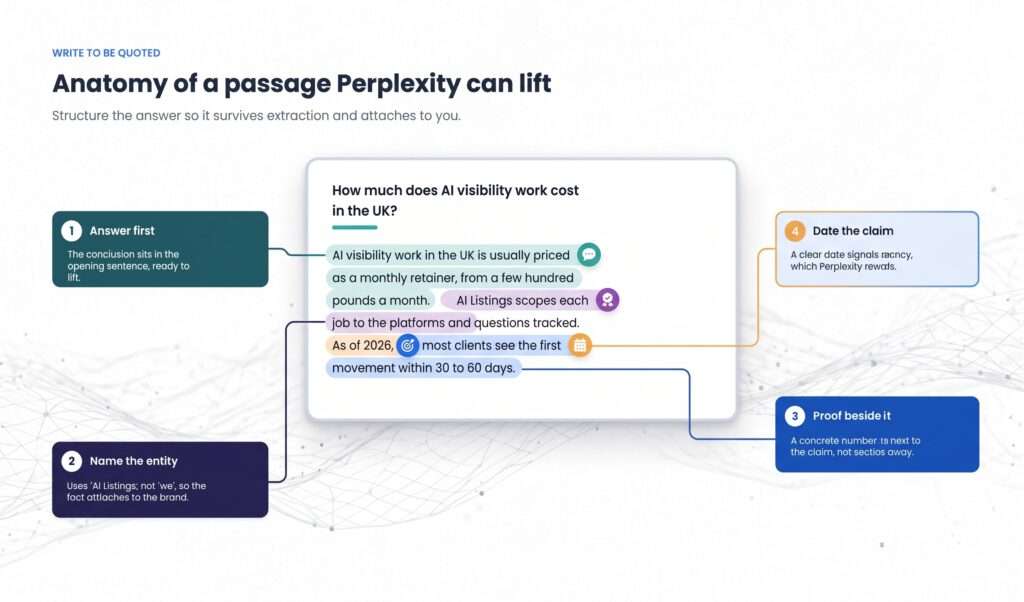
Lead with the conclusion. State the answer in the first sentence or two of a section, then explain and support it underneath. Perplexity tends to pull the first substantive, quotable claim it can attribute, so burying your answer under three paragraphs of preamble hands the citation to a competitor who got to the point faster. This is the core idea behind answer engine optimisation, and it is worth reading our primer on what answer engine optimisation actually involves if the concept is new. Beyond answering first, five habits make a page far easier to quote.
- Keep the proof next to the claim. Put the supporting statistic, example or definition in the same paragraph as the statement it backs up, not three sections away. The model rewards passages that stand on their own.
- Write in extractable units. Definitions, numbers, direct comparisons and step by step lists are the formats Perplexity lifts most often. Give it those shapes deliberately.
- Name your entity exactly. Use your business name and your service names consistently instead of vague labels like we or our team, so the model can attach the fact to you rather than to nobody. This is where entity SEO does quiet, heavy lifting.
- Date your claims. Put a clear date near anything time sensitive and keep the page updated, because recency is one of Perplexity’s strongest signals.
- Keep your URLs stable. A citation you earn is only useful while the link works, so avoid needlessly changing page addresses.
Let Perplexity in: the technical layer
None of this matters if Perplexity cannot reach your pages in the first place. Perplexity uses two user agents that every site owner should recognise. PerplexityBot is the crawler that builds the index behind cited answers. Perplexity-User is the agent that visits a page in real time when a live question needs it. To be eligible for citations, you need to allow both in your robots.txt file rather than blocking them by accident.
You can see the current user agent strings and the published IP ranges in Perplexity’s own crawler documentation. A few practical notes sit alongside that. If you run a firewall or a web application firewall, make sure Perplexity’s published addresses are not being quietly blocked, because a well meaning security rule is a common culprit. Changes to robots.txt can take up to a day to register on Perplexity’s side, so do not expect an instant result. And because the extractor reads your rendered page, your important content needs to be present in the HTML rather than dependent on JavaScript to appear.
It is also worth making your site easy for AI systems to understand at a structural level. Marking up key pages with structured data from schema.org helps machines read who you are, what you sell and where you operate. If you want to guide AI crawlers more explicitly, an llms.txt file is an emerging option too, which we cover in our explainer on llms.txt.
Do not forget the rest of the web
Here is something many businesses miss. Perplexity does not only read your website. Because it aggregates results from several search engines and leans on trusted third party sources, a large part of whether it treats you as credible is decided off your own site. For commercial questions in particular, it draws heavily on review platforms and community discussions, including places like Reddit, where real people compare options.
That means your off site footprint is part of your Perplexity strategy. Consistent, positive reviews, accurate business listings and genuine mentions on reputable sites all raise the odds that Perplexity treats your brand as a safe answer to recommend. This is the same trust and proof layer explained in our piece on the signals AI tools use to decide who to trust, and it is central to how our Shortlist System is built. You are not just optimising a page. You are building a body of evidence that a cautious model can lean on.
A worked example
Let us make this concrete with a UK example. Say you run a plantation shutters company in West Sussex, and a potential customer asks Perplexity: who are the best plantation shutter companies in West Sussex, and roughly how much do shutters cost?
Here is what Perplexity does with that. It splits the question into parts: the best companies in a specific area, and typical costs. It searches the live web, pulls a shortlist of pages and reranks them. If your site has a clear West Sussex page that names the area in plain terms, answers the cost question with real figures near the top, shows recent project photos with dates, and is backed by strong, current reviews, you are a genuinely strong candidate to be cited on both halves of that question.
If instead your pricing is hidden behind a contact form, your location is implied rather than stated, and your newest content is two years old, a competitor with a clearer and fresher page gets quoted in your place, even if your actual craftsmanship is better. Perplexity cannot see your workshop. It can only see your evidence. The lesson is one that favours focused, honest local businesses: the company that answers the question cleanly and can be verified tends to win the citation, not necessarily the biggest name in the market. It helps to understand how customers actually find businesses through AI search, because the buying journey now often begins inside answers like these.
Common mistakes to avoid
Most missed citations come down to a handful of avoidable errors. If your brand is not showing up, start by ruling these out.
- Burying the answer. Long, throat clearing introductions push your quotable line out of reach. Lead with the point.
- Writing for humans only, with nothing to extract. If there is no clean, self contained sentence to lift, there is nothing for Perplexity to cite, however nice the prose.
- Letting content go stale. On questions that evolve, old pages quietly drop out. A page with no visible date and no recent update is at a disadvantage.
- Blocking the crawlers by accident. A restrictive robots.txt rule or an over eager firewall can make you invisible without anyone realising.
- Hiding content behind JavaScript. If your key facts only appear after scripts run, the extractor may never see them.
- Being vague about who and where you are. Missing entity and location signals cost you the local citations that are often the easiest to win.
- Chasing one platform in isolation. Being cited by Perplexity but absent from ChatGPT or Google’s AI answers is a per platform gap, and the only way to manage it is to measure each one. A single LLM visibility score across the tools that matter turns that guesswork into something you can track.
Your Perplexity citation checklist
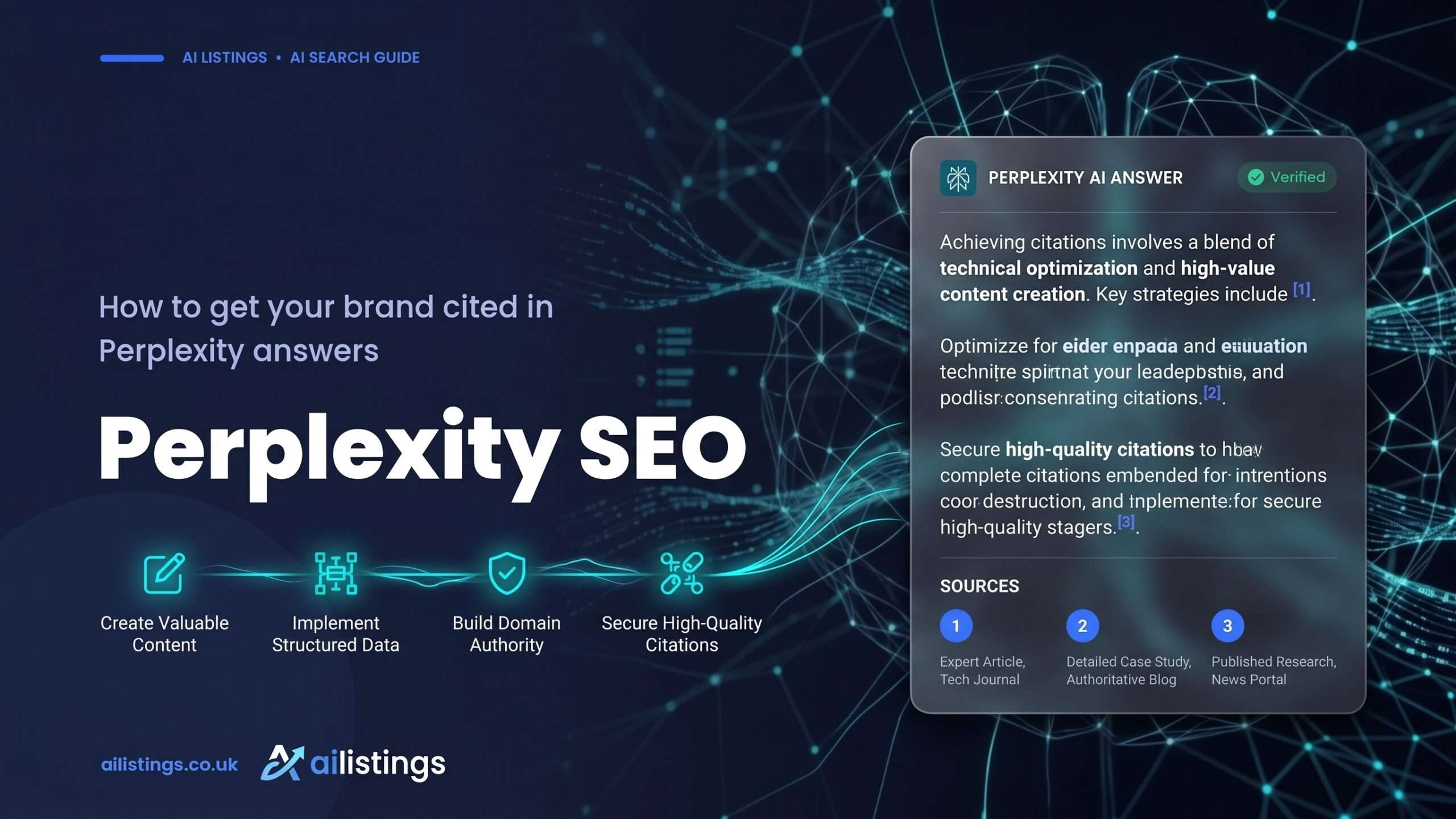
If you take nothing else from this guide, work through the following. It is the same short checklist we run against a client site, and it is summarised in the diagram below.
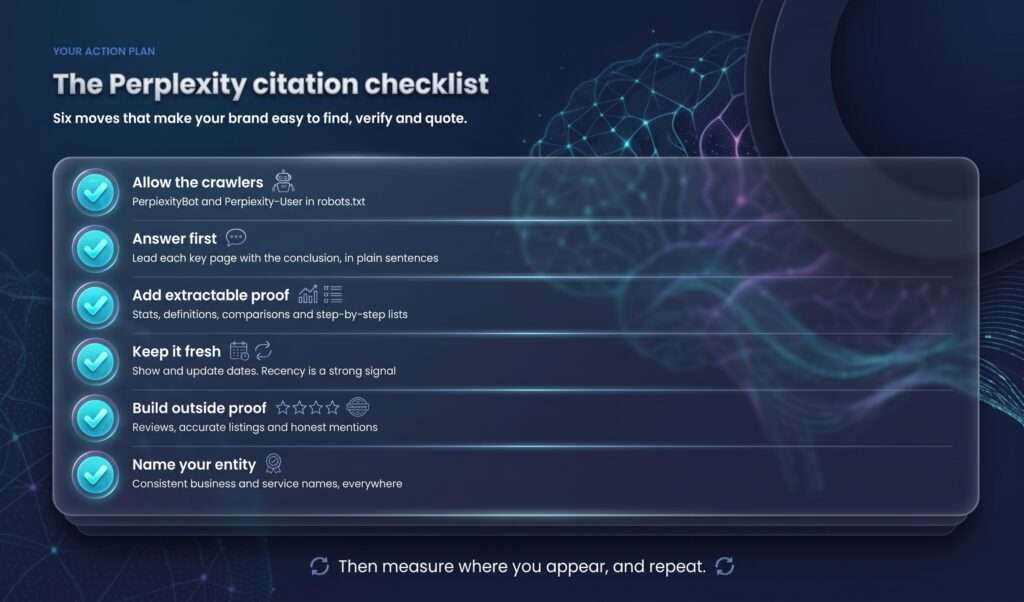
- Allow the crawlers. Confirm PerplexityBot and Perplexity-User are permitted in your robots.txt and not blocked by your firewall.
- Answer first. Lead every important page and section with the conclusion, written in plain, self contained sentences.
- Add extractable proof. Include the statistics, definitions, comparisons and step by step lists that models love to quote.
- Keep it fresh. Show dates, and update your key pages regularly, because Perplexity rewards recency.
- Build outside proof. Earn reviews, keep your listings accurate and gather honest mentions on trusted sites.
- Name your entity. Use consistent business and service names everywhere so facts attach cleanly to your brand.
Then measure where you appear, fix the weakest pages first, and repeat. Visibility in Perplexity is not a one off task. It is a habit.
Frequently asked questions
Is Perplexity SEO different from normal SEO?
The foundations overlap, but the goal changes. Traditional SEO tries to rank a link in a list. Perplexity SEO tries to get your words quoted inside an answer. You still need a clean, crawlable, trustworthy site, but you put far more weight on answering first, providing extractable facts, keeping content fresh and earning third party proof. Think of it as SEO with the emphasis moved from ranking to being chosen.
Can I pay to appear in Perplexity’s cited answers?
No. The sources cited inside an organic Perplexity answer are selected on merit, and there is no way to buy your way into that list. Perplexity has introduced advertising in some formats, but that is separate from the citations in an answer. The realistic route to being cited is to make your business the most relevant, trustworthy and quotable option for the questions your customers ask.
How long does it take to get cited?
It varies. Because Perplexity retrieves live and refreshes pages fairly often, simple changes such as making a page answer first and crawlable can start showing relatively quickly. Building the authority, reviews and consistent evidence needed to win competitive commercial questions takes longer, usually a matter of months rather than days. The clearer and fresher your pages, the faster the first movement tends to come.
Should I block AI crawlers to protect my content?
For most businesses that want to be recommended, no. Blocking PerplexityBot keeps your content out of Perplexity’s answers entirely, which means losing a growing visibility channel. If you have genuinely sensitive areas, restrict those specific paths rather than blocking the crawler across your whole site. Weigh the protection you gain against the recommendations you give up.
How do I know if Perplexity is already citing me?
Ask it. Put the questions your customers ask into Perplexity and see which businesses it names and links. Because answers can vary between runs, check the important questions more than once and track the results over time rather than trusting a single search. A visibility score measured across the questions that matter to you gives you a reliable benchmark to improve against.
Turn Perplexity into a source of enquiries
Perplexity is one of the clearest opportunities in AI search right now, precisely because it tells you who it trusts and sends real traffic when it cites you. The businesses that win are not always the biggest. They are the ones whose pages are easy to reach, easy to quote and easy to verify.
If you would like to know where you currently stand, we can run the exact questions your customers are asking across Perplexity and the other major tools, then show you where your brand already appears and where it is missing. That is the starting point for our Perplexity SEO work, and you can book a discovery call whenever you are ready to see your own numbers.