
For years, traditional SEO focused mainly on improving rankings in Google search results through keywords, backlinks, technical optimisation, and content creation.
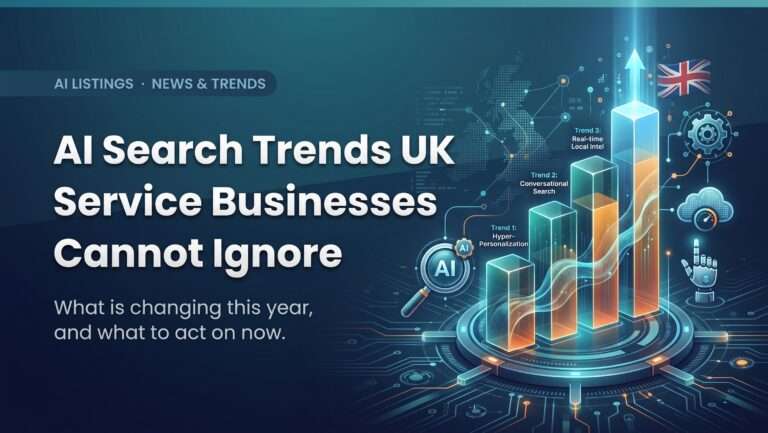
While these strategies still matter, search behaviour is rapidly changing. More users are now relying on AI-powered search platforms such as ChatGPT, Google AI Overviews, Perplexity, Gemini, and other large language model (LLM) systems to discover businesses, services, and recommendations.
This shift means businesses can no longer rely on traditional SEO alone if they want to remain visible online in 2026 and beyond.
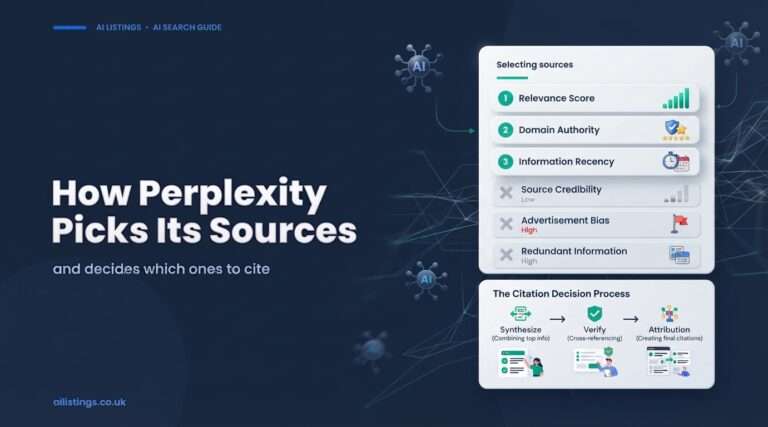
AI search engines evaluate brands differently. Instead of simply ranking web pages, they increasingly analyse trust signals, entity recognition, authority, structured information, consistency, and broader web presence to decide which businesses appear repeatedly in AI-generated answers.
Companies such as AI Listings help UK businesses improve AI visibility and strengthen their presence across modern AI-driven search environments.
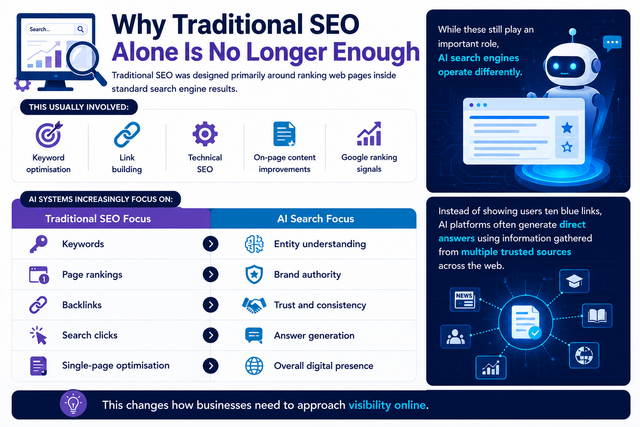
Why Traditional SEO Alone Is No Longer Enough
Traditional SEO was designed primarily around ranking web pages inside standard search engine results.
This usually involved:
- Keyword optimisation
- Link building
- Technical SEO
- On-page content improvements
- Google ranking signals
While these still play an important role, AI search engines operate differently.
AI systems increasingly focus on:
| Traditional SEO Focus | AI Search Focus |
| Keywords | Entity understanding |
| Page rankings | Brand authority |
| Backlinks | Trust and consistency |
| Search clicks | Answer generation |
| Single-page optimisation | Overall digital presence |
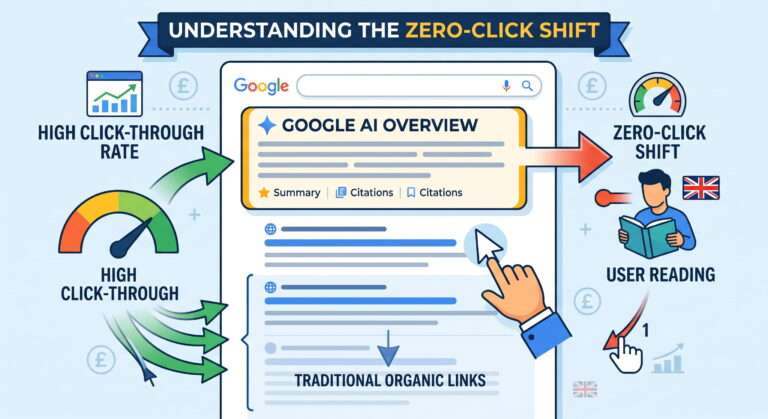
Instead of showing users ten blue links, AI platforms often generate direct answers using information gathered from multiple trusted sources across the web.
This changes how businesses need to approach visibility online.
What Are AI Search Engines Looking For?
AI search systems attempt to identify trustworthy businesses that consistently appear authoritative across multiple platforms.
They often evaluate:
- Brand mentions across the web
- Consistent business information
- Structured data and entity signals
- Website authority and expertise
- Reviews and reputation signals
- Industry relevance
This process is often referred to as AI visibility optimisation or LLM optimisation.
Professional AI visibility optimisation services help businesses improve these signals so AI systems recognise the brand more consistently.
Why Entity Recognition Matters
One of the biggest differences between traditional SEO and AI search visibility is entity recognition.
AI systems increasingly try to understand businesses as recognised entities rather than simply matching keywords on a webpage.
For example, AI models may analyse:
- Business name consistency
- Industry associations
- Authoritative mentions
- Local relevance
- Expertise indicators
This helps AI systems determine whether a business should appear in generated recommendations and answers.
Professional AEO and GEO services focus specifically on improving how businesses are understood by AI-driven search systems.
Why Google Rankings Alone Are No Longer the Full Goal
Many businesses still focus entirely on ranking first in Google search results.
However, AI-generated search answers are changing user behaviour significantly.
Increasingly, users are asking AI tools questions such as:
- “Who is the best AI optimisation agency in the UK?”
- “Which company offers reliable roofing services in Manchester?”
- “What are the best local cleaning services in London?”
Instead of clicking through multiple websites, users often receive direct recommendations generated by AI systems.
This means businesses now need visibility inside:
- AI-generated answers
- Conversational search platforms
- AI recommendation systems
- Voice-assisted search environments
Traditional SEO alone was not built specifically for this new search behaviour.
How UK Businesses Can Start Improving AI Search Visibility
Businesses looking to improve AI rankings should focus on broader digital authority rather than keywords alone.
Important strategies often include:
Build Consistent Brand Signals
AI systems prefer businesses with consistent information across multiple trusted platforms.
This includes:
- Consistent business name
- Accurate contact information
- Unified branding
- Clear service descriptions
Inconsistent information can weaken AI confidence in a business entity.
Strengthen Authority and Expertise
AI systems increasingly prioritise expertise and credibility.
Businesses should focus on:
- High-quality educational content
- Industry expertise
- Trustworthy case studies
- Demonstrated experience
Professional SEO services still support visibility foundations, but modern optimisation now extends far beyond traditional keyword targeting.
Improve Structured Data and Website Clarity
AI systems rely heavily on structured and organised information.
Clear website structure helps AI platforms understand:
| Website Element | Why It Matters |
| Service pages | Clarifies business relevance |
| Structured data | Improves entity recognition |
| Internal linking | Strengthens topical authority |
| FAQ content | Supports AI answer extraction |
Businesses with poorly structured websites often struggle to appear consistently in AI-generated responses.
Why Case Studies and Real-World Proof Matter
AI systems increasingly favour businesses with measurable evidence of expertise.
This is why detailed case studies are becoming more valuable for AI visibility.
Businesses can strengthen authority through:
- Real project examples
- Measurable outcomes
- Industry-specific success stories
- Geographic relevance
Professional AI visibility case studies help demonstrate how businesses improve online authority and AI recognition across different industries.
AI Search Engines Prioritise Trust Signals
Trust signals are becoming one of the most important ranking factors for AI-generated answers.
These may include:
- Positive reviews
- Industry mentions
- Expert content
- Business transparency
- Consistent online reputation
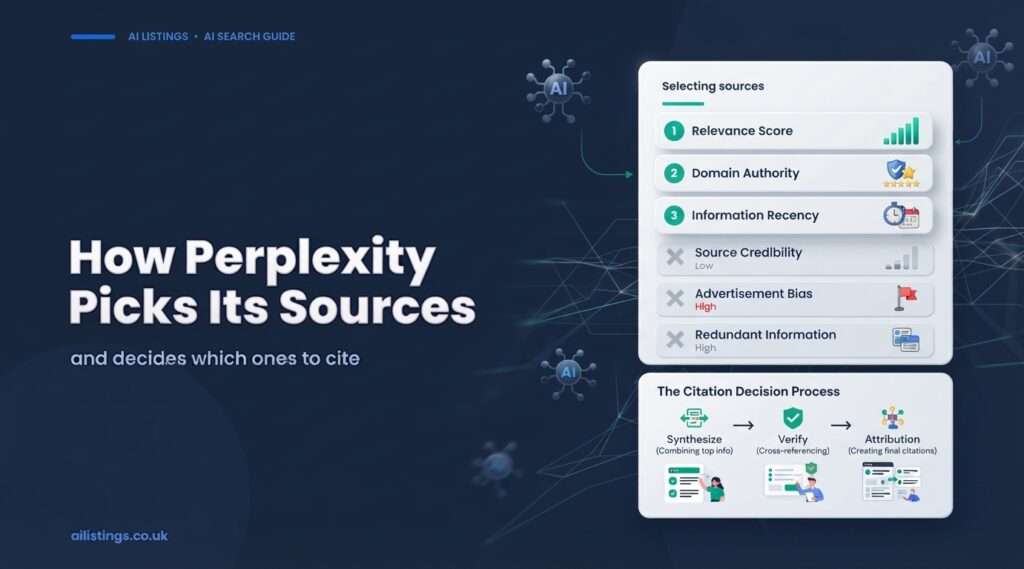
AI systems often combine information from multiple sources before deciding which businesses to recommend.
This means businesses need a stronger overall digital footprint rather than relying only on one website page ranking well.
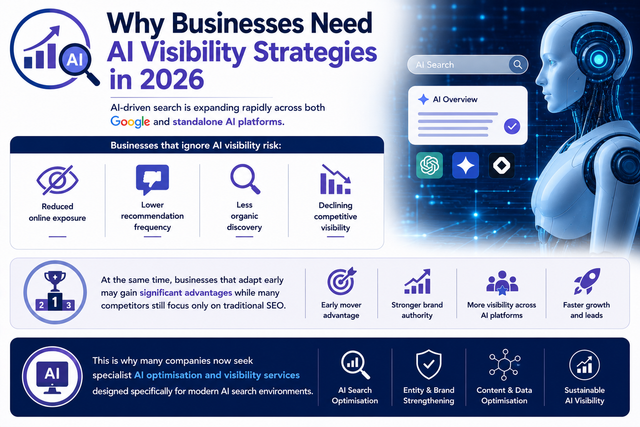
Why Businesses Need AI Visibility Strategies in 2026
AI-driven search is expanding rapidly across both Google and standalone AI platforms.
Businesses that ignore AI visibility risk:
- Reduced online exposure
- Lower recommendation frequency
- Less organic discovery
- Declining competitive visibility
At the same time, businesses that adapt early may gain significant advantages while many competitors still focus only on traditional SEO.
This is why many companies now seek specialist AI optimisation and visibility services designed specifically for modern AI search environments.
The Role of AI Visibility Audits
Many businesses are unaware of how AI systems currently interpret their brand.
AI visibility audits help identify:
- Weak entity recognition
- Inconsistent business information
- Missing authority signals
- Poor structured data
- Limited AI discoverability
Businesses can also assess their current AI presence using the AI Visibility Quiz provided by AI Listings.
This helps companies understand how prepared they are for AI-powered search visibility.
Why Early Adoption Matters
Search technology is evolving rapidly.
Businesses that improve AI visibility now may benefit from:
| Early AI Optimisation Benefit | Potential Advantage |
| Stronger entity recognition | More AI recommendations |
| Better authority signals | Increased trust |
| Improved AI discoverability | Higher visibility |
| Broader digital presence | Long-term competitive advantage |
Companies that wait too long may eventually struggle to compete against businesses already established within AI-generated search ecosystems.
Choosing the Right AI Optimisation Partner
AI search optimisation requires a different approach from traditional SEO alone.
Businesses should look for agencies experienced in:
- AI visibility optimisation
- Entity recognition strategies
- AEO and GEO optimisation
- Structured authority building
- Modern AI search behaviour
Professional AI discovery consultations help businesses understand how AI search systems currently view their online presence and where improvements are needed.
Conclusion
Traditional SEO still matters, but it is no longer enough on its own in the age of AI-powered search.
Modern AI systems increasingly prioritise trust, authority, entity recognition, structured information, and broader digital credibility when deciding which businesses appear in generated answers.
For UK businesses looking to remain competitive in 2026 and beyond, AI visibility optimisation is becoming an essential part of long-term digital strategy.
Companies that adapt early to AI search behaviour may gain significant visibility advantages while competitors continue relying only on older SEO methods.
Frequently Asked Questions
Is traditional SEO still important?
Yes. Traditional SEO still supports website visibility, but AI search optimisation now requires additional strategies focused on trust and entity recognition.
What is AI visibility optimisation?
AI visibility optimisation helps businesses improve how AI search systems recognise, understand, and recommend their brand online.
What are AI search engines?
AI search engines include platforms like ChatGPT, Perplexity, Gemini, and Google AI Overviews that generate direct answers instead of only displaying search results.
Why is entity recognition important?
Entity recognition helps AI systems understand businesses as trusted and authoritative brands rather than just webpages.
Who helps businesses improve AI search visibility in the UK?
AI Listings provides AI visibility optimisation, AEO, GEO, and AI search ranking services for businesses across the United Kingdom.