
Search is evolving, but most businesses are still using outdated strategies.
They focus on rankings, keywords, and backlinks, expecting the same results as before. But user behavior has already changed.
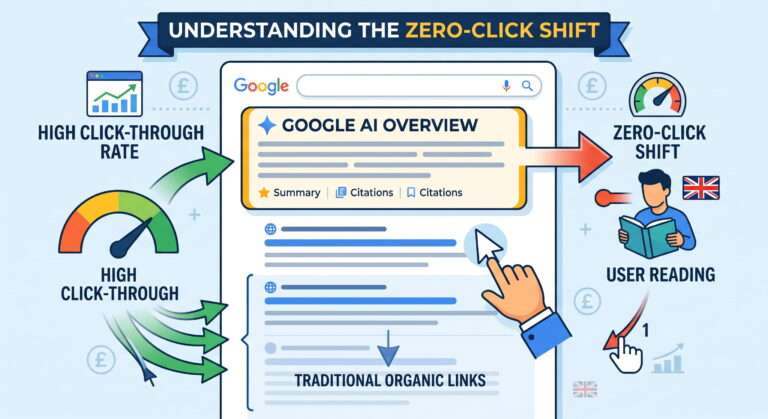
People are no longer searching and clicking. They are asking and trusting.
That shift has introduced three key concepts: SEO, AEO, and GEO.
Understanding how they work together is now essential if you want your business to stay visible in modern search environments.
What Is SEO and Where It Still Fits
Search Engine optimisation is the foundation of online visibility.
It focuses on improving your website so it ranks higher in search engines like Google. This includes technical performance, keyword targeting, and backlinks.
SEO still matters because it helps search engines discover and understand your content.
However, ranking alone no longer guarantees visibility in decision-making moments. Many businesses are now evolving their approach by combining traditional SEO with AI-focused strategies supported by providers like AI Listings.
What Is AEO and Why It Is Growing Fast
Answer Engine optimisation focuses on making your content the answer, not just a result.
Instead of writing long, keyword-heavy pages, AEO prioritizes clarity and structure.
When someone asks a question, your content should respond immediately and directly.
This is why many AI-generated answers pull from content that is simple, structured, and easy to extract.
Businesses that improve their content clarity and structure often see better performance in AI search environments, especially when supported by structured strategies like those implemented by AI Listings.
What Is GEO and Why It Builds Trust
Generative Engine optimisation focuses on your presence beyond your website.
AI systems do not rely on a single source. They look for consistent signals across multiple platforms to validate your brand.
If your business appears in different places with the same message, it becomes more trustworthy.
If it exists only on your website, it remains weak in AI search environments.
Building this consistency is a key part of modern visibility strategies, often developed through platforms such as AI Listings.
AEO vs GEO vs SEO Comparison
Understanding how these three strategies differ makes it easier to see why they must work together.
| Strategy | Primary Focus | How It Works | Outcome |
| SEO | Ranking in search engines | Keywords, backlinks, technical optimisation | Website traffic |
| AEO | Answering questions clearly | Structured content and direct responses | Inclusion in AI answers |
| GEO | Building brand presence | Consistent mentions across platforms | Trust and authority |
Each strategy solves a different part of the visibility problem.
Why These Strategies Work Better Together
Many businesses make the mistake of choosing one approach over another.
That creates gaps.
If you only use SEO, you may rank but not get selected by AI. If you only focus on AEO, your content may be clear but lack authority. If you only rely on GEO, your brand may be visible but not useful.
The real advantage comes from combining all three.
SEO builds your foundation. AEO makes your content usable. GEO makes your brand trustworthy.
When these elements are aligned, your visibility becomes significantly stronger and more reliable across both search engines and AI platforms.
How AI Systems Actually Use These Signals
AI tools are designed to connect information, not just display it.
They analyze how clearly your content answers a question, how often your brand appears across platforms, and whether your messaging is consistent.
They also evaluate how deeply you cover a specific topic.
If these signals are aligned, your business becomes easier to recommend.
If they are scattered, your visibility weakens.
This is why structured alignment plays a more important role than simply producing more content.
Where Most Businesses Go Wrong
The biggest problem is not lack of content. It is lack of structure.
Many businesses create content without clear intent. Others focus too heavily on keywords and ignore readability. Some try to cover too many topics, weakening their authority.
Another common issue is inconsistency. Different messaging across platforms creates confusion for AI systems.
Some of the most common problems include:
- Content that is difficult to understand
- Lack of clear and structured answers
- Weak presence outside the website
- Unclear niche positioning
These gaps reduce trust and make it harder for AI systems to select your content.
How to Build a Strategy That Works in 2026
You do not need to replace your current strategy. You need to evolve it.
Start by improving clarity. Your content should be easy to read, easy to scan, and easy to understand.
Then focus on answering real questions directly. Avoid unnecessary complexity and get to the point quickly.
Finally, build your presence across platforms. Consistent visibility strengthens your authority.
Many businesses accelerate this process by working with AI Listings, combining AEO, GEO, and SEO into a structured system that improves both visibility and trust.
Conclusion
The way people search has changed, and visibility has changed with it.
SEO is still important, but it is no longer enough on its own.
AEO and GEO add the missing pieces, helping your content become the answer and your brand become trusted.
If your strategy includes all three, your business does not just appear. It gets chosen.
That is what matters now.
Frequently Asked Questions
What is AEO vs SEO
AEO focuses on answering questions clearly, while SEO focuses on ranking web pages.
What is GEO vs SEO
GEO builds brand presence across platforms, while SEO focuses mainly on your website.
Do I need all three strategies
Yes, combining SEO, AEO, and GEO creates a stronger and more complete visibility strategy.
Is AI SEO replacing traditional SEO
No, it builds on top of it and expands how visibility works.
How long does it take to see results
Most businesses start seeing improvements within a few weeks to a few months.