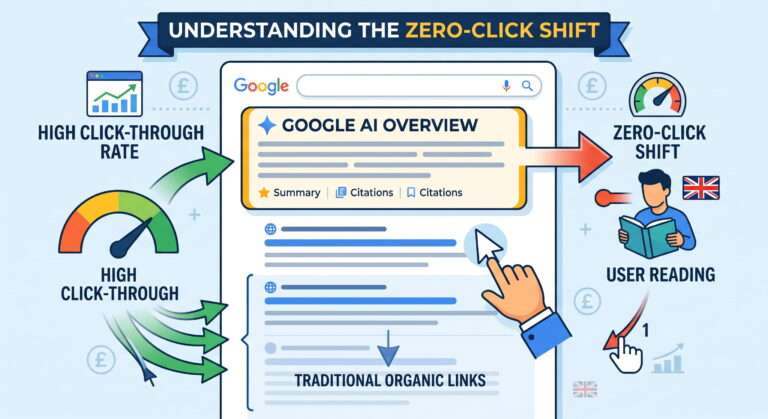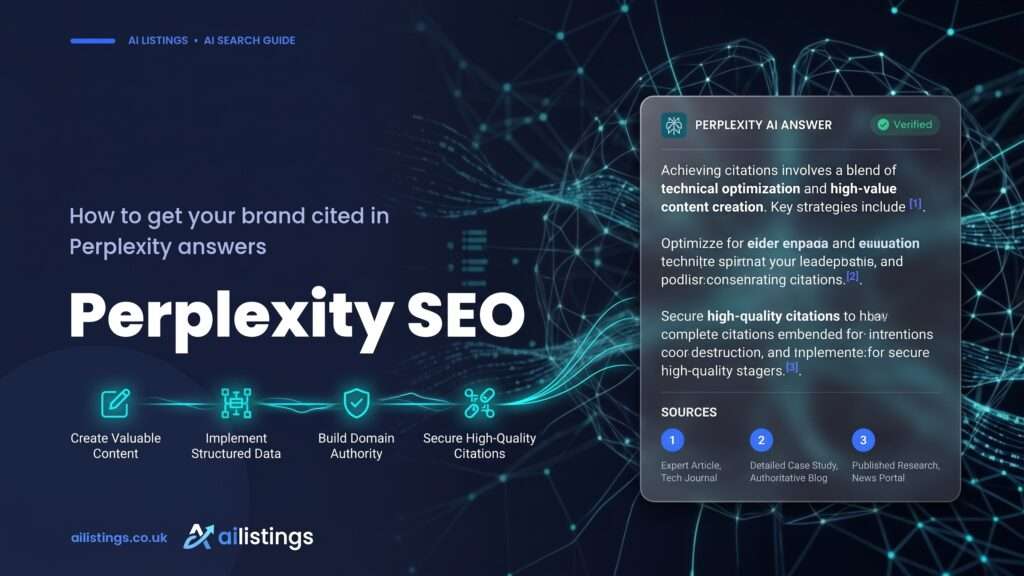

Search is no longer just about ranking on Google.
People are now asking questions directly to AI tools like ChatGPT, Gemini, and Perplexity, and trusting the answers they receive.
If your business is not mentioned in those answers, it is no longer part of the decision-making process.
This is where LLM optimisation services come in.
They focus on helping your business become visible inside AI-generated responses, not just traditional search results.
Companies like AI Listings are built around this shift, helping businesses adapt to how Large Language Models interpret and recommend information.
What Are LLM Optimisation Services
LLM optimisation services focus on improving how your content is understood and used by Large Language Models (LLMs).
Instead of optimising only for search engines, the goal is to make your content clear, structured, and reliable enough for AI systems to extract and include in their answers.
This requires a different approach compared to traditional SEO, where rankings are the main focus.
With LLM optimisation, the focus shifts toward clarity, consistency, and trust, three areas that providers like AI Listings actively work on when improving AI visibility.
How LLM Optimisation Is Different from Traditional SEO
Traditional SEO focuses on ranking web pages. LLM optimisation focuses on being selected as part of an answer.
This difference changes how content should be created and structured.
| Traditional SEO | LLM Optimisation |
| Ranks pages in search engines | Appears inside AI-generated answers |
| Focuses on keywords | Focuses on clarity and meaning |
| Relies on backlinks | Relies on trust and consistency |
| Measures clicks | Measures mentions and visibility |
Businesses that combine both approaches tend to perform better across both search engines and AI platforms.
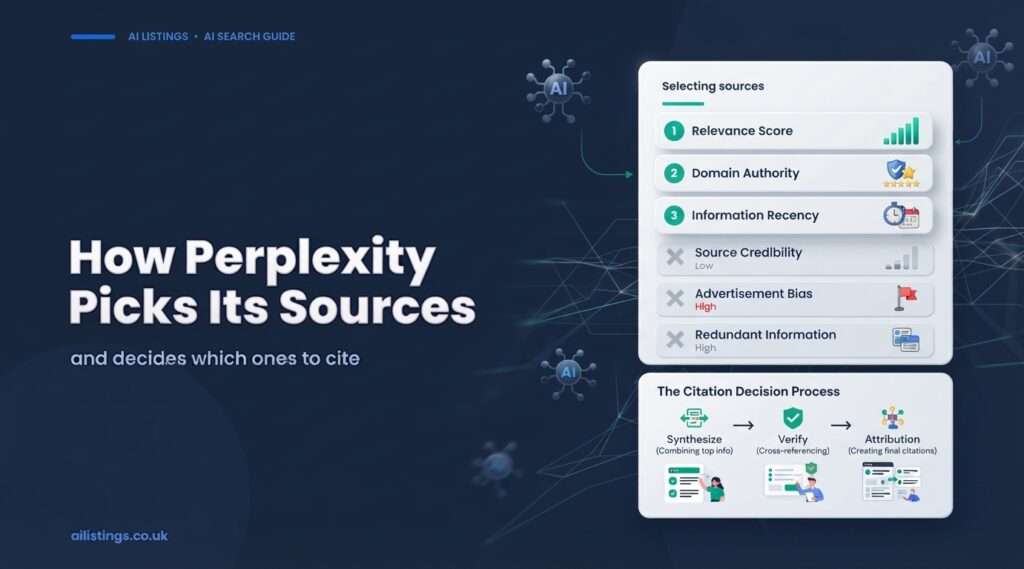
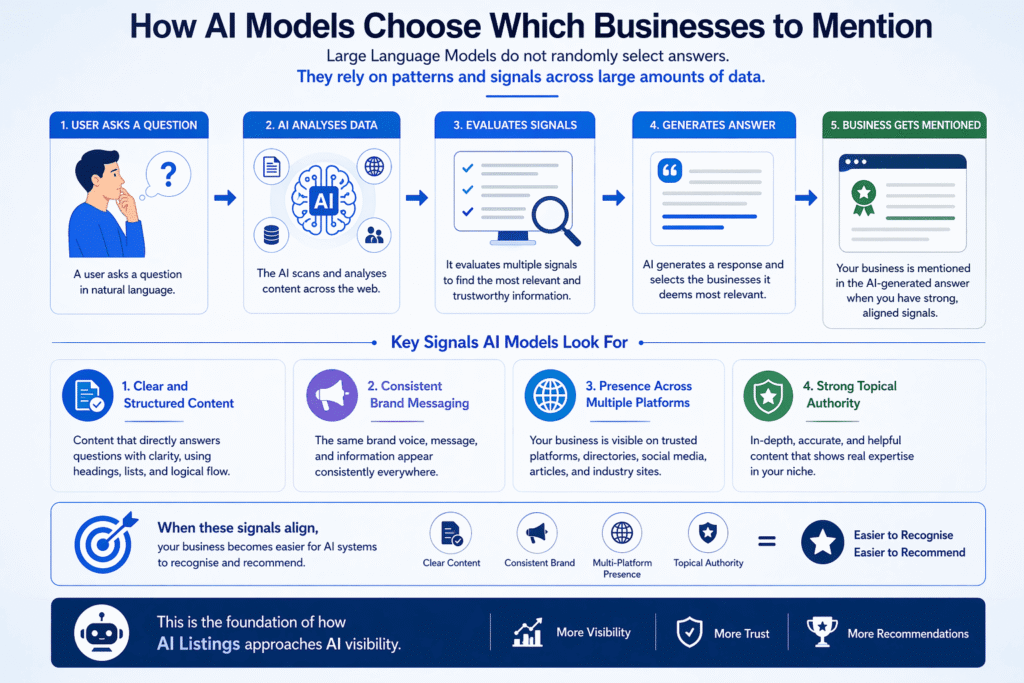
How AI Models Choose Which Businesses to Mention
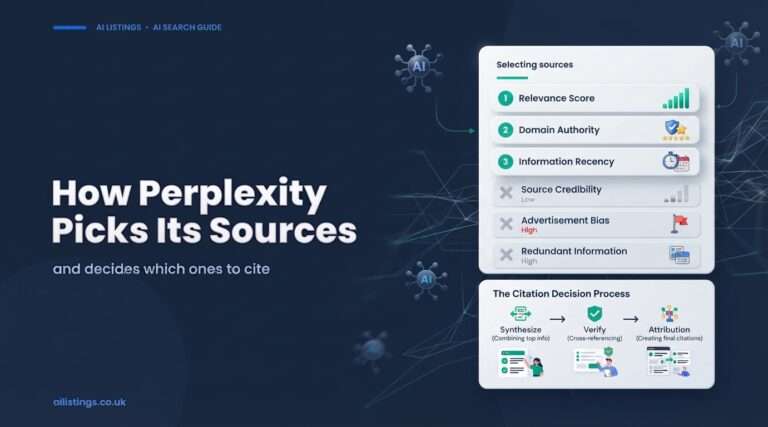
Large Language Models do not randomly select answers. They rely on patterns and signals across large amounts of data.
They analyse how clearly your content answers a question, how consistent your brand appears across the web, and how deeply you cover a topic.
Some of the key signals include:
- Clear and structured content
- Consistent brand messaging
- Presence across multiple platforms
- Strong topical authority
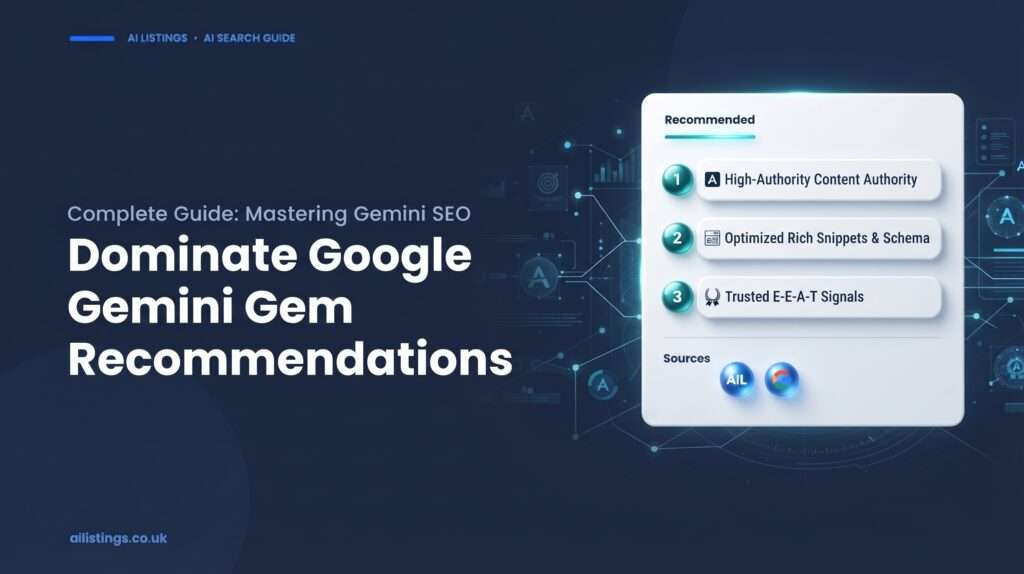
When these signals align, your business becomes easier for AI systems to recognise and recommend. This is the foundation of how AI Listings approaches AI visibility.
What Makes Content LLM-Friendly
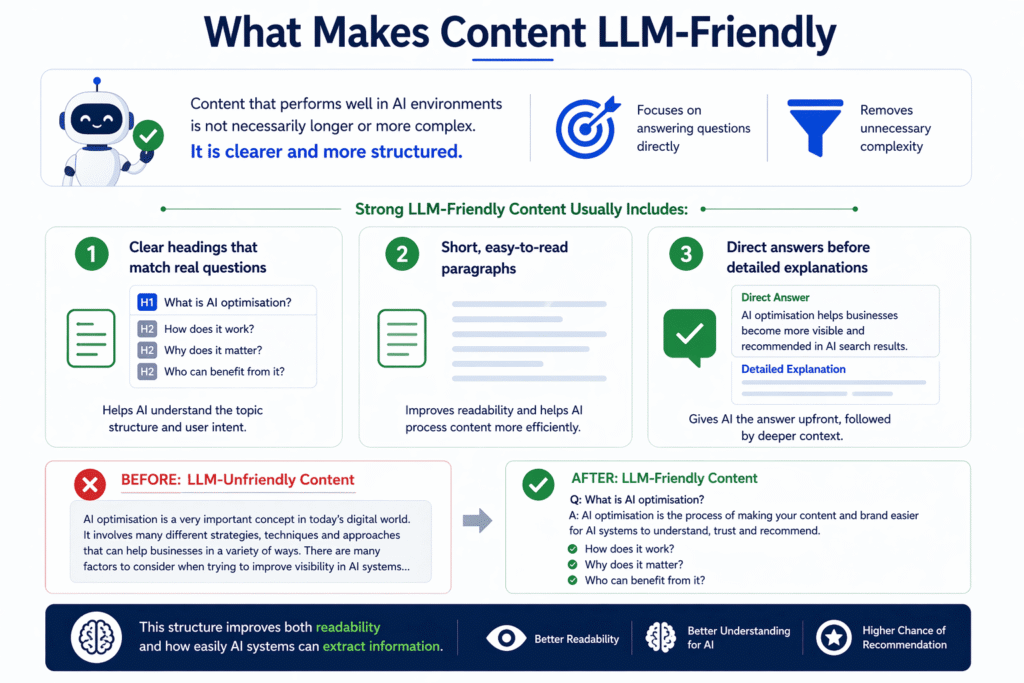
Content that performs well in AI environments is not necessarily longer or more complex. It is clearer and more structured.
It focuses on answering questions directly and removing unnecessary complexity.
Strong LLM-friendly content usually includes:
- Clear headings that match real questions
- Short, easy-to-read paragraphs
- Direct answers before detailed explanations
This structure improves both readability and how easily AI systems can extract information.
Core Elements of LLM Optimisation
LLM optimisation services are built around a combination of strategies that work together.
Below is a simple breakdown:
| Element | What It Does | Why It Matters |
| Content Clarity | Simplifies language and structure | Improves AI understanding |
| Entity Signals | Defines your brand clearly | Helps AI recognise your business |
| Consistency | Aligns messaging across platforms | Builds trust |
| Topical Authority | Focuses on one niche deeply | Strengthens recommendations |
These elements form the foundation of a strong AI visibility strategy.
Why Most Businesses Struggle with LLM Visibility
Many businesses assume that having content is enough.
In reality, the issue is not the quantity of content, but how it is structured and presented.
Common problems include unclear messaging, inconsistent branding, and content that is difficult for AI systems to process.
Another major limitation is having little to no presence outside the website, which weakens overall trust signals.
How LLM Optimisation Services Help Businesses Grow
LLM optimisation services focus on aligning all the elements that influence AI visibility.
Instead of creating more content, the focus is on improving clarity, structure, and consistency across all touchpoints.
This often includes refining existing content, improving how information is presented, and expanding brand presence across relevant platforms.
This is where AI Listings supports businesses by building connected signals that AI systems can recognise and trust over time.
When Should You Consider LLM Optimisation Services
You should consider LLM optimisation services if your business is not appearing in AI-generated answers, even if your website performs well in traditional search.
It is also important if your content lacks clarity, your messaging varies across platforms, or your brand has limited visibility outside your website.
In these situations, working with specialists such as AI Listings can help structure your strategy and improve results more efficiently.
Conclusion
LLM optimisation services are becoming an essential part of modern digital visibility.
They focus on helping your business move from being indexed to being recommended.
As AI systems continue to shape how people search and make decisions, clarity, consistency, and trust will define which businesses get chosen.
AI Listings helps businesses build that visibility by aligning content, brand signals, and structure into a system that works across AI platforms.
Frequently Asked Questions
What are LLM optimisation services
They improve how your business appears in AI-generated answers by making your content clear, structured, and consistent.
How is LLM optimisation different from SEO
SEO focuses on rankings, while LLM optimisation focuses on being included in AI answers.
Do I still need SEO
Yes, SEO provides the foundation, but it should be combined with AI-focused strategies.
What does AI Listings do
It helps businesses improve AI visibility by aligning content, structure, and brand presence across platforms.
How long does it take to see results
Most businesses start seeing improvements within a few weeks to a few months.