
For more than twenty years, the internet worked in a predictable way.
People searched using keywords. Search engines returned links. Businesses competed to rank higher. The websites that ranked best received the clicks.
That model is now changing.
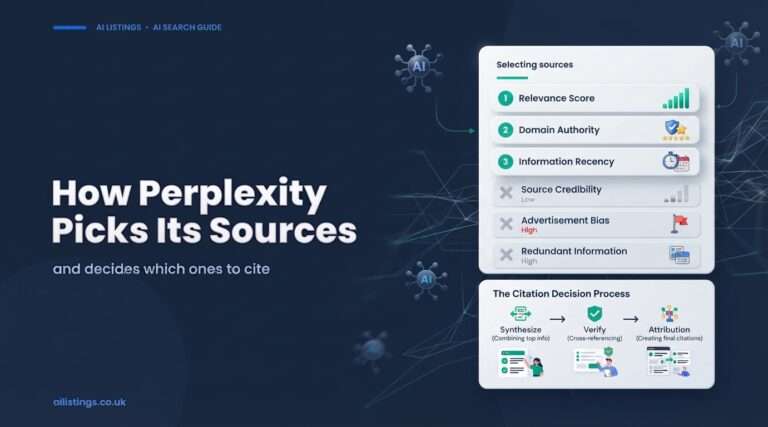
Large language models such as ChatGPT, Gemini and Perplexity are reshaping how information is discovered, interpreted and recommended. Instead of browsing websites, users increasingly ask AI systems questions and trust the answers they receive.
This shift is redefining how businesses become visible online.
Visibility is no longer just about ranking.
It is about being included in answers.
The Traditional Search Model: How Visibility Worked Before AI
For decades, digital marketing followed a simple structure.
- A user asked a question.
- Google returned a list of websites.
- The user clicked several results.
- The user decided which business to trust.
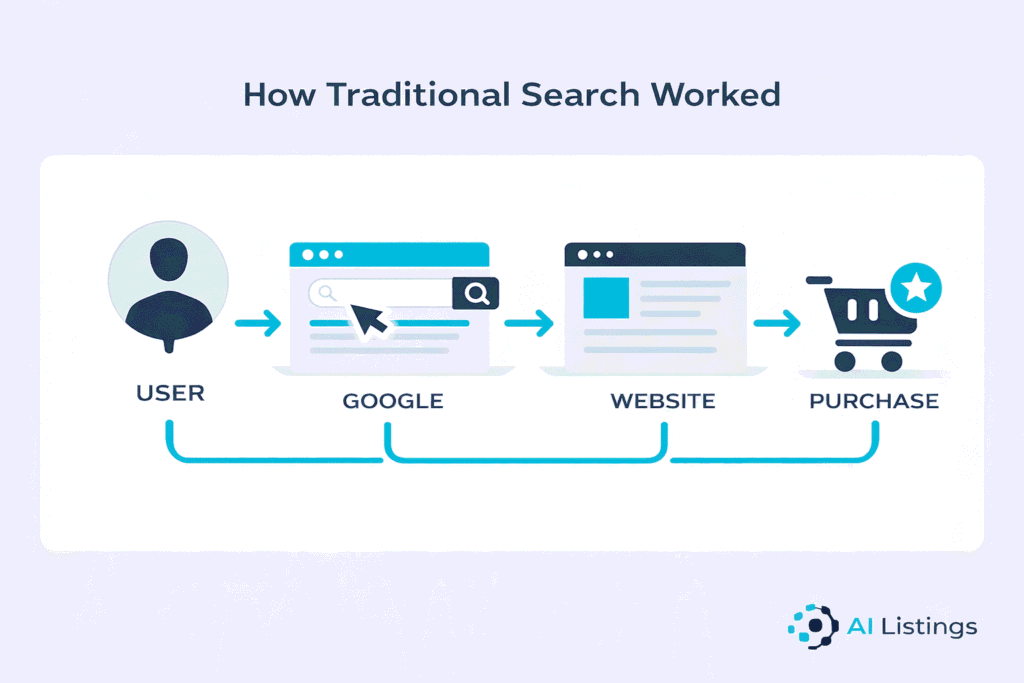
This created the familiar journey:
User → Google → Website → Purchase
Every strategy supported this path.
Businesses invested in:
- keyword optimisation
- technical SEO
- backlinks
- conversion-focused landing pages
- content marketing
Success was measured using:
- clicks
- traffic
- rankings
- conversion rates
This model defined the internet for twenty-five years.
The New Discovery Model: AI Is Now the Interface to the Internet
Today, AI platforms increasingly sit between users and websites.
Instead of browsing multiple pages, users ask:
- Who is the best accountant near me
- What agency improves AI visibility
- Which company provides local SEO services
AI systems respond with a single structured answer.
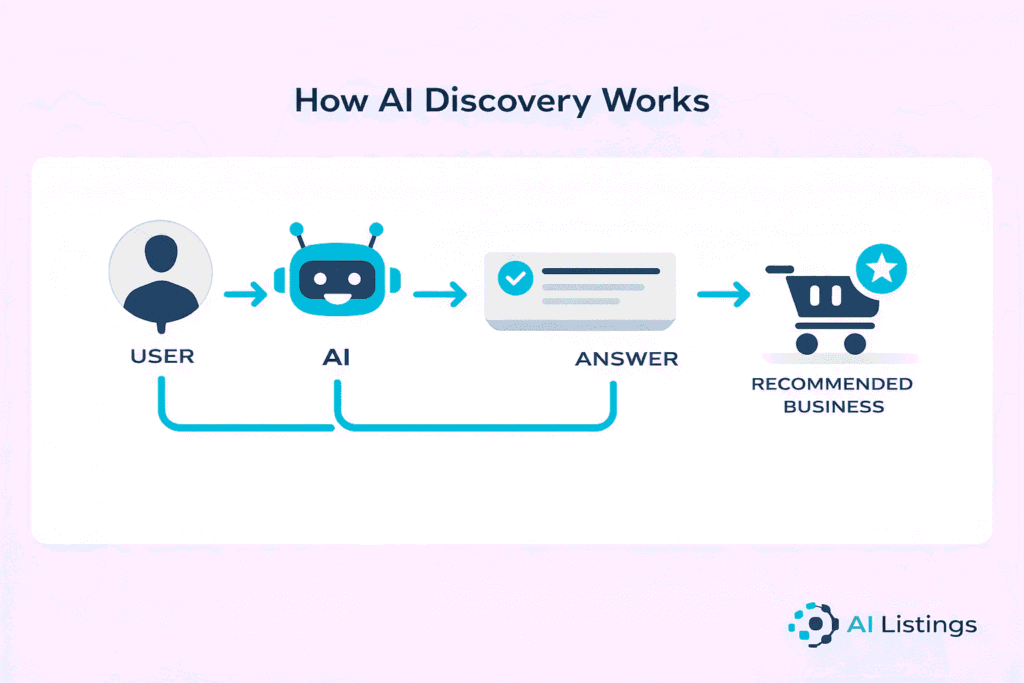
That changes the journey completely:
User → AI → Answer → Recommended Business
If your business is not included in that answer, you are no longer part of the decision process.
The Most Important Change: AI Has Become the Reader
Previously, humans read websites directly.
Now AI reads websites first and summarises them for users.
This is the biggest shift in modern search behaviour.
AI platforms act as:
- researchers
- analysts
- summarisers
- decision filters
They scan multiple sources and generate one response that users trust.
Your website now has two audiences:
- humans
- AI systems
Increasingly, AI is becoming the primary one.
Why This Shift Changes Marketing Forever
Traditional SEO depended heavily on clicks.
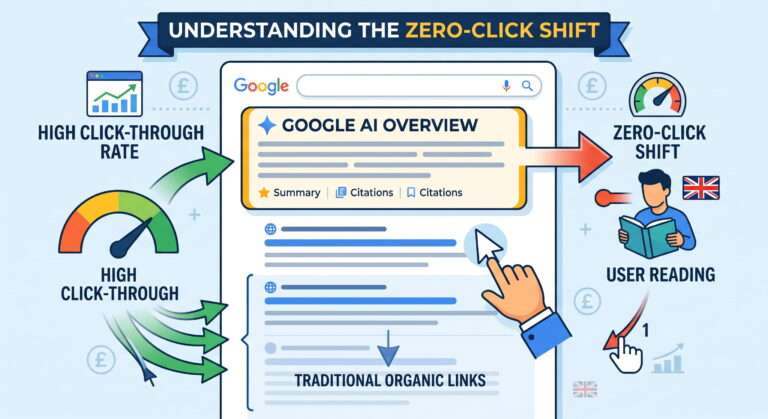
AI search reduces clicks because answers appear immediately inside the interface.
Instead of competing for traffic, businesses now compete for inclusion.
Visibility is moving from:
to
earning recommendations
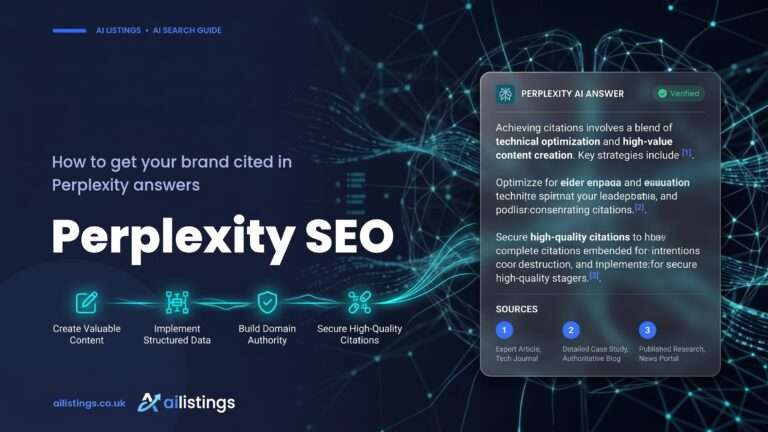
This is why strategies such as Answer Engine Optimization and Generative Engine Optimization are growing rapidly.
What AEO and GEO Mean in the New Search Environment
Answer Engine Optimization helps your content become extractable inside AI responses.
Generative Engine Optimization helps your brand appear consistently across trusted platforms so AI systems recognise and recommend it.
Together they improve how often your business appears inside AI-generated answers.
Modern visibility depends on both.
How AI Systems Read Content Differently from Humans
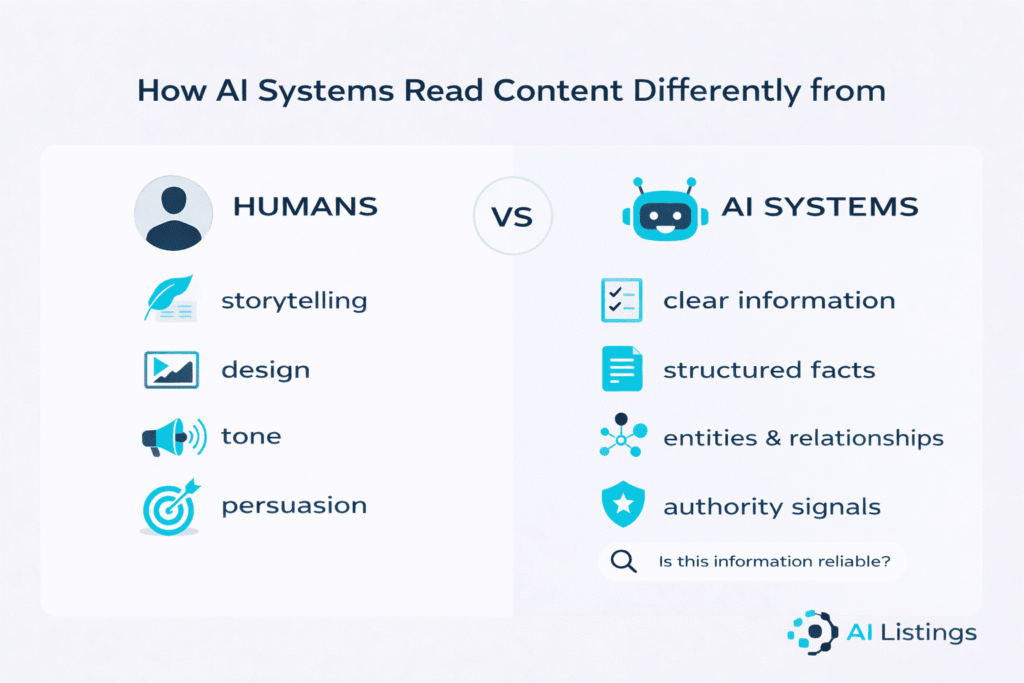
Humans read content emotionally.
AI reads content structurally.
People respond to:
- storytelling
- design
- tone
- persuasion
AI systems evaluate:
- clear information
- structured facts
- entities and relationships
- authority signals
AI platforms are trying to answer one core question:
Is this information reliable and widely supported across sources
Content that is structured clearly is more likely to be used inside AI responses.
Why Traditional Marketing Pages Are No Longer Enough
Many websites still rely on persuasion-focused content.
Statements like:
- we are the best agency
- we provide leading services
- we deliver excellent results
are not useful to AI systems unless supported by structured information.
Modern content must explain clearly:
- who you are
- what you do
- where you operate
- who you help
- why your expertise matters
This helps AI systems understand and recommend your business.
The Four Signals That Drive AI Visibility Today
Modern AI-ready content follows four key principles.
1 Clear Entity Information
AI systems need unambiguous identity signals such as:
- company name
- location
- services
- industries served
- service coverage
These signals confirm your business exists as a recognised entity.
2 Structured Knowledge Content
AI prefers content organised into clear sections such as:
- What is AI visibility
- How AI search works
- What services this company provides
- Who the services are for
This structure improves extractability.
Extractability improves recommendation likelihood.
3 Topical Authority Across Your Industry
AI platforms prefer businesses that demonstrate depth rather than surface-level coverage.
Topical authority is built through:
- service pages
- guides
- framework articles
- case studies
- knowledge resources
The stronger your subject coverage becomes, the more likely AI systems rely on your content.
4 Consistency Across the Web
AI models compare multiple sources before recommending businesses.
They evaluate whether your business appears consistently across:
- directories
- review platforms
- industry listings
- articles
- social platforms
- Google Business Profile
Consistency builds trust.
Trust drives recommendations.
Why Local SEO Now Plays a Bigger Role in AI Visibility
For service-based businesses especially, location signals influence recommendation confidence.
AI systems confirm legitimacy using:
- Google Business Profile optimisation
- consistent business contact details
- local directory alignment
- location-specific service pages
- regional expertise signals
These local signals help AI platforms understand where your business operates and who it serves.
That increases visibility inside local recommendations.
The New Competition: Being Understood by AI
In the past, businesses competed for ranking positions.
Today, businesses compete to be understood by AI systems.
Modern visibility depends on whether AI platforms recognise:
- who you are
- what you do
- where you operate
- why you are credible
Businesses that build structured knowledge signals win this new visibility model.
How Businesses Can Strengthen AI Visibility Today
Improving AI visibility does not require rebuilding your entire website.
Start with structured improvements:
- define services clearly
- publish question-based content
- strengthen Google Business Profile signals
- align directory listings
- maintain consistent messaging
- build topic clusters around your expertise
These steps increase recommendation readiness across AI platforms.
The Internet Is Moving from Rankings to Recommendations
The internet is shifting from search engines listing websites to AI systems recommending answers.
This changes the goal of digital visibility.
Instead of focusing only on traffic, businesses must ensure AI systems understand:
- who they are
- what they do
- why they are credible
Businesses that invest early in structured knowledge, entity consistency and topical authority will lead the next era of discovery.
Those that rely only on traditional SEO risk becoming invisible as AI increasingly becomes the gateway between users and the web.
AI Listings helps businesses strengthen visibility across search engines and AI platforms using structured SEO, AEO and GEO strategies designed for modern discovery environments where recommendations matter more than rankings.