Perplexity SEO That Gets You Cited and Clicked
The AI answer engine that sends real traffic back to its sources
Perplexity shows its working. Every answer carries numbered citations linking to the sources it used. Get cited and you earn both the recommendation and the click. Our Perplexity SEO services optimise for exactly how it selects those sources.

Perplexity Answers From Live Sources. Being One Is the Whole Game.
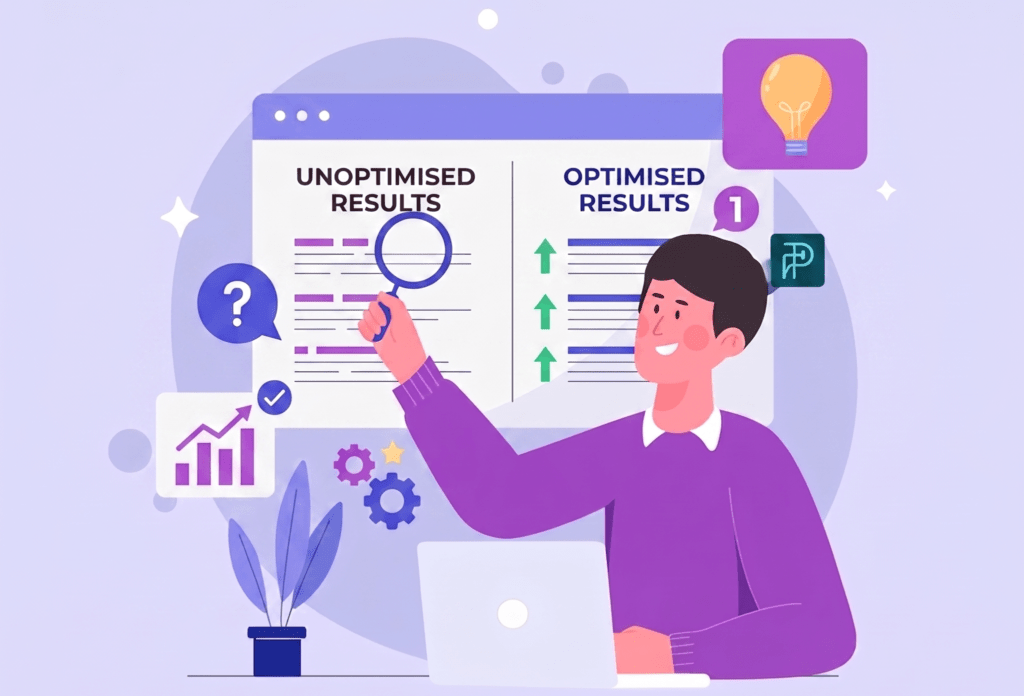
Unlike models that answer mostly from training, Perplexity searches the web for each question, reads what it finds, and writes an answer with citations attached. Your page either makes it into that citation list or it does not.
Getting cited depends on:
- Being retrievable: crawlable, fast and open to its crawler
- Answering the question directly, in language it can lift cleanly
- Being credible enough to cite: current, specific and verifiable
This page covers Perplexity specifically. It sits under our wider AI visibility optimisation services, which cover every major AI platform together.
What is Perplexity SEO?
Perplexity SEO is the work of making your pages the sources Perplexity retrieves, cites and links to when users ask questions in your category.
What it involves
Perplexity SEO focuses on:
- Technical retrievability, so its crawler can actually reach and read your pages
- Direct, well-structured answers it can quote without rewriting
- Freshness, because it favours current sources over stale ones
- Specificity: real figures, named locations and concrete detail it can attribute
Why it is worth doing separately
Perplexity behaves differently from other AI tools:
- It cites visibly, so inclusion is easy to verify and prove
- It links out, so citations can send measurable referral traffic
- It re-searches constantly, so improvements show up faster than in trained models
That combination makes it the platform where AI visibility work shows its results soonest.
How Our Perplexity SEO Works

Citation Testing
- We run your customers’ real questions through Perplexity
- Every citation recorded: who gets cited, and whether it is you

Retrievability Fixes
- Crawler access, speed and indexability checked and corrected
- Nothing valuable left behind a barrier its crawler cannot pass

Citable Content
- Pages restructured to answer questions directly and quotably
- Specific, verifiable detail added, because vague pages rarely get cited

Authority and Freshness
- Independent mentions grown, key pages kept current
- Progress re-tested monthly against your LLM Visibility Score™
What You Get
Perplexity Citation Audit
- Your current citation rate across a real prompt set
- Which competitors are being cited instead
- Technical barriers stopping you being retrieved
Core Perplexity Optimisation
- Retrievability and crawler fixes
- Answer-first content restructuring
- Specificity and proof improvements
Ongoing Citation Tracking
- Monthly re-testing of your prompt set
- Updated LLM Visibility Score™
- Referral traffic from Perplexity reported alongside citations
See Who Perplexity Cites in Your Category
Perplexity names its sources in every answer. Find out whether yours is one of them, and what it takes to be cited when your customers ask.
Frequently Asked
Questions
Q1: What is Perplexity SEO?
Perplexity SEO is the practice of optimising your website so Perplexity retrieves, cites and links to it when answering questions in your category. Because Perplexity searches the live web for every query and shows its sources, the work centres on being retrievable, directly answering the question, and being credible enough to cite.
Q2: How does Perplexity choose which sources to cite?
It searches the web for each question, reads the pages it retrieves, and cites the ones that answer the question most directly and credibly. Pages that state the answer plainly, include specific verifiable detail and load quickly for its crawler are far more likely to be selected than pages that bury the answer in marketing copy.
Q3: How is Perplexity different from ChatGPT for visibility?
Perplexity retrieves live sources and shows numbered citations with links on nearly every answer, so inclusion is visible and can send referral traffic. ChatGPT answers more often from its trained model and cites less consistently. In practice, Perplexity rewards good content faster, while ChatGPT rewards long-term entity authority.
Q4: Can I pay to be cited by Perplexity?
No. Citations in Perplexity’s answers are earned, not bought. Perplexity has run advertising formats in its product, but those are separate from the organic citations that appear beneath an answer.
Q5: Does Perplexity send real traffic to websites?
Yes, more visibly than most AI tools, because its citations are clickable links. The volume is smaller than traditional search, but the visitors tend to arrive further along in their decision, having already read a summary that recommended you.
Q6: Do I need to allow Perplexity's crawler?
Yes, if you want to be cited. Perplexity uses its own crawler to retrieve pages, and blocking it in robots.txt removes you from consideration entirely. We check crawler access as part of the audit, since this single setting can explain a complete absence from citations.
Q7: How quickly do changes show up in Perplexity?
Faster than in most AI platforms, often within weeks, because Perplexity re-searches the live web for each query rather than relying on a training snapshot. Technical fixes and content restructuring tend to show first.
Q8: Does being cited by Perplexity help elsewhere?
Often, yes. The qualities that earn citations, clear direct answers, technical accessibility and verifiable credibility, are the same qualities other AI systems reward. Work done here usually lifts visibility across the other platforms too.
Q9: How do you measure Perplexity visibility?
We run a fixed set of real customer prompts through Perplexity and record how often your site appears in the citation list. That becomes your LLM Visibility Score™ for the platform, tracked monthly alongside competitor comparison and any referral traffic it produces.
Q10: Does Perplexity SEO work for local businesses?
Yes. Local queries often return a short citation list because few local sites answer the question directly. A clear service page that names the area, states the answer plainly and carries genuine proof can be cited quickly.